Henry F. Ashurst Quotes
If you want to kill your own child because the Senate straightens out its crooked limbs, you must take the responsibility and accept the verdict of history.
The Senate debate on the ratification of the Versailles Peace Treaty was difficult for President Wilson, who wanted the treaty ratified without reservations or exceptions:. Wilson would accept no reservations and the treaty was never ratified.
Henry F. Ashurst, 1874-1962, U. S. Senator (Democrat, AZ), Remark, November 1919
Sourced by: Eigen's Political and Historical Quotations

The majority of the country strongly favored American participation in the League of Nation provided there were some reservations that made it explicitly clear, the American troops could not be committed without the approval of Congress and that nothing would impinge on U. S. domestic sovereignty. Wilson wanted no exceptions or reservations to the treaty he had negotiated and would not compromise in any way. The issues were soon forgotten in what had become a test of will and power between the Senate and the President. The treaty was never ratified and without the United States, the League of Nations collapsed.


He was at that time the chosen delegate to the peace conference. The government officials were unhappy with their agreement. Ataturk overruled the government and the treaty was signed.


In the history of diplomacy and peace treaty negotiations, the various national representative would meet in secret, negotiate treaties and add secret clauses. Then the treaty was finally made public for approbal or ratification in the different countries no one would be told of the secret clauses. Each side would have a written secret copy of these clauses, but the publics of the country would never know. For example, the agreements about various WWII issues that were secret have not yet been made public in the United States or England. Wilson wanted to put an end to that diplomatic ploy and wanted all the peace treaty clauses to be public with nothing secret. He also wanted the deliberations to made in public woth press access. He had little support for the idea in most European nations.

Referring to the Senate's right to ratify treaties and the effect on negotiations,

This problem had not been resolved even by the beginning of the 21st century. With the inclusion of Hawaii as a state, there became 100 senators and the obstruction possibilities were even greater.

Laws that do not work can be repealed by Congress with the President’s signature. However, if there is an international treaty, the United States may NOT change the laws to fix something that does not work. At best, the administration can try to re-negotiate the treaty, but has no power to assure the change unless, it withdraws from the treaty. However, most treaties are very complex and involve many elements and there is no way to withdraw from a single aspect of a treaty, even if it is a bad aspect.


1st Earl Lloyd-George of Dwyfor

The Germans pretended to maintain the treaty and when the French totally evacuated the Rhineland, Hitler started his preparation for WWII and a little later invaded France. Clemenceau had been snookered.

Hamas, a terrorist group, however had taken over the Gaza Strip by force, ousting the Fatah Palestinian government. Hamas were then the de facto dictatorial rulers of almost 2 million Palestinians while the Fatah Government controls the West Bank with most of the Palestinians.


Individual countries are bound only by the treaties and compacts that they have signed and ratified. So very often someone will allege that a country has violated international law, but that nation may not have signed the Treaty or Compact that binds them, so thy may not be in violation at all whereas some other country in similar circumstances would be. Also, many countries (including the United States) sign treaties but take exception to some of the provisions. Then there are not bound by that provision. This is what makes International Law so complicated and difficult to understand.
Senators have throughout our history used their power of treaty ratification to encroach on the executive branch and participate in the actual negotiations of treaties. President’s like McKinley to avoid non ratification actually appointed 3 senators to his 5 man treaty negotiating team. The 2/3 super majority is a high hurdle for ratification and presidents have always tilted with the Senate on treaties.

The Republican controlled Senate had turned down the ratification of the League of Nations presented by Democratic President Wilson, and looked like they would turn down any international treaty even if presented by a Republican President. This statement allowed the treaty ratification by only a few votes. However, after that the Senate turned down our participation in the Permanent Court of Arbitration at the Hague. See {640099}.

Rothkopf had a dislike of the middle much like the classic Hightower quotation, {603453} .

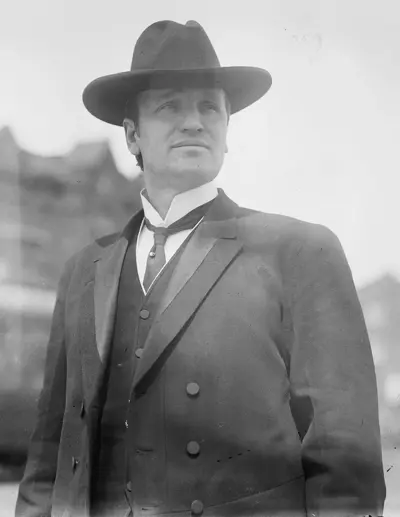
Henry Fountain Ashurst was an American Democratic politician and one of the first two Senators from Arizona. Largely self-educated, he served as a district attorney and member of the Arizona Territorial legislature before fulfilling his childhood ambition of joining the United States Senate. During his time in the Senate, Ashurst was chairman of the Committee on Indian Affairs and the Judiciary Committee.
