Harold Nicolson Quotes
… ignorant and irresponsible men cutting up the world as if it were a cake.
Harold Nicolson, 1886-1968, British Diplomat and Historian, Description of The Allied Leaders at the Versailles Treaty negotiations at the end of WWI, Quoted in Norman Rose, Harold Nicolson
Sourced by: Eigen's Political and Historical Quotations

In the history of diplomacy and peace treaty negotiations, the various national representative would meet in secret, negotiate treaties and add secret clauses. Then the treaty was finally made public for approbal or ratification in the different countries no one would be told of the secret clauses. Each side would have a written secret copy of these clauses, but the publics of the country would never know. For example, the agreements about various WWII issues that were secret have not yet been made public in the United States or England. Wilson wanted to put an end to that diplomatic ploy and wanted all the peace treaty clauses to be public with nothing secret. He also wanted the deliberations to made in public woth press access. He had little support for the idea in most European nations.


"Imperium" is a Latin word which, in a broad sense, translates roughly as 'power to command'. In ancient Rome, different kinds of power or authority were distinguished by different terms "Imperium" referred to the sovereignty of the state over the individual—Wikipedia. The Consul was a wonderful diplomat. He had no respect for the South not only because they were fighting to maintain slavery, but also he found most of their diplomats and officials very incompetent. He found it hard to participate in all the Confederate ceremonies as he was their exhibit number one that they had International Recognition and they "exhibited him frequently. Despite this he was charming and never argumentative about slavery or other political positions that he loathed. As a matter of fact, the Southern Diplomats regarded him as a man sympathetic to the South with an understanding of their point of view. As a result he gained a huge amount of intelligence which he regularly dispatched back to London. England was neutral {35520} in the Civil War, but England did not recognize the Confederacy as a nation, else they would have sent an ambassador. The Southern politicians worked hard to get him to carry their message that if they would be recognized, they would grant England many favorable trade advantages as the English textile industry really wanted Southern cotton. While apparently sympathetic to the Southern cause, his reports contained all the negative information about the South and counseled against recognition just as the English Ambassador in Washington did—see {583131}.


The fascist, military clique that ran Japan at the time had no respect for treaties or International Law as understood by most Western nations. China was a land of warlords and corrupt military leaders. There was then an extensive history of Anti-Asian feeling and activity in America. Stimson, made the classic mistake of correctly assessing the Japanese leaders but generalizing from them and some Chinese corrupt military leaders to all Asians and their governments. Indeed, after the American occupation of Japan ending WWII, the Japanese adapted to democracy very well and have been instrumental in making and keeping many international treaties,


The Barbary Pirates had an incredible extortion racket going in the Mediterranean. If nations would pay them an annual sum each year, they would not attack and seize merchant ships of that country and sell the ships and goods while holding the sailors for ransom. President Jefferson had first dispatched American warships and authorized a major land operation which were very effective. Finally, a treaty was negotiated but Decatur reminded the Navy of what brought the Algerians to the negotiating table.


Burke argued for England giving America much more freedom and self determination.
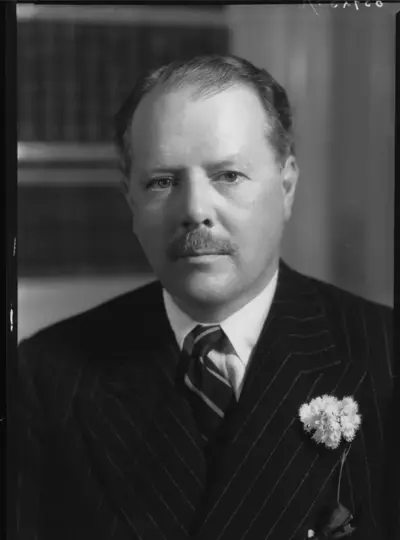
Sir Harold George Nicolson KCVO CMG was a British politician, diplomat, historian, biographer, diarist, novelist, lecturer, journalist, broadcaster and gardener. His wife was the writer Vita Sackville-West.
