Henry L. Stimson Quotes
The peace treaties of…Western nations…no more fit the Asian governments than a stove pipe hat would fit an African savage.
The fascist, military clique that ran Japan at the time had no respect for treaties or International Law as understood by most Western nations. China was a land of warlords and corrupt military leaders. There was then an extensive history of Anti-Asian feeling and activity in America. Stimson, made the classic mistake of correctly assessing the Japanese leaders but generalizing from them and some Chinese corrupt military leaders to all Asians and their governments. Indeed, after the American occupation of Japan ending WWII, the Japanese adapted to democracy very well and have been instrumental in making and keeping many international treaties,
Henry L. Stimson, 1867-1950, U. S. Secretary of State (Republican), U. S. Secretary of War, Governor General, Philippine Islands, Diary, October 14, 1931
Sourced by: Eigen's Political and Historical Quotations


Half a century later there were many Asian countries which had adopted democratic style governments. While Kennan was right at the time, what he did not anticipate is the rapid rise of communications technology and the consequent expansion of American cultural values. The Asians became different people, and when they did so, they adopted democratic forms of government albeit more heavily guided by strong leaders than America and other industrial democracies.


This statement was widely interpreted to be a statement of Western Christian superiority over the Muslim world.

She and her husband, like many of the "America Firsters", believed that Hitler should be allowed to overrun Europe and Russia.

The President was spending all day and most of the evening with Japanese and Russian negotiators. He was trying to mediate an end to the Russo-Japanese War. Despite all the difficulties, Roosevelt found a new skill of personal international diplomacy. The war seemed intractable, but Roosevelt was able to get a peace treaty signed for which he was awarded the Nobel Peace Prize. It is doubtful that any modern president could spend so much concentrated time on an issue that was really not in the national interest of the United States. However, Roosevelt’s time and effort investment paid off in that by settling that dispute and getting nothing out of it for America or American business, the United States was in world opinion, elevated to a new status of fair, impartial and non-selfish international activity—a model that despite some lapses in later years, the United States has been unique.

The Barbary Pirates had an incredible extortion racket going in the Mediterranean. If nations would pay them an annual sum each year, they would not attack and seize merchant ships of that country and sell the ships and goods while holding the sailors for ransom. President Jefferson had first dispatched American warships and authorized a major land operation which were very effective. Finally, a treaty was negotiated but Decatur reminded the Navy of what brought the Algerians to the negotiating table.


The “We” to which he was referring were the British officials and civil servants who governed all of India as a colony of the British Empire.
The “Vegas Rules” emanate from the slogan and practice that “Whatever happens in Vegas, stays in Vegas.
At the time, the major European countries were in a competitive scramble for colonies in Africa—so much so that there were very few independent territories left. The maps and borders of Africa were really decided by the Europeans.


The great European powers were attending an International Congress—Summit Meeting of the heads of government and their diplomats to deal with the crisis of Tsarist Russian military expansionism. None of the other European powers of the time wanted or could afford war so Russia could only be thwarted by Great Britain. There were many in England who thought that the British should not even attend and should send troops immediately. The Queen and the Royal Family were among those. At the Congress Disraeli, who had much personal affection for Queen Victoria, wanted to reassure her. 1st Earl of Beaconsfield. If the Congress did not succeed the mainland of Europe would have been at war. Disraeli obtained everything England wanted. See Russian Ambassador Prince Gortchakoff’s observation.


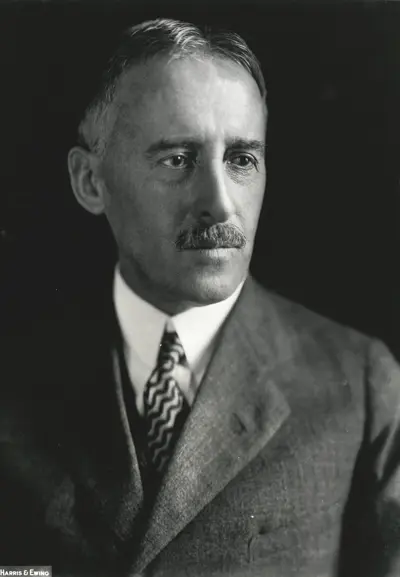
Henry Lewis Stimson was an American statesman, lawyer, and Republican Party politician. Over his long career, he emerged as a leading figure in U.S. foreign policy by serving in both Republican and Democratic administrations. He served as Secretary of War (1911–1913) under President William Howard Taft, Secretary of State (1929–1933) under President Herbert Hoover, and Secretary of War (1940–1945) under Presidents Franklin D. Roosevelt and Harry S. Truman.
