George F. Kennan Quotes
It is urgently necessary that we recognize our own limitations as a moral and ideological force among the Asiatic peoples. Our political philosophy and our patterns for living have very little applicability to masses of people in Asia. They may be all right for us, with our highly developed political traditions running back into the centuries and with our peculiarly favorable geographic position; but they are simply not practical or helpful, today, for most of the people in Asia.
Half a century later there were many Asian countries which had adopted democratic style governments. While Kennan was right at the time, what he did not anticipate is the rapid rise of communications technology and the consequent expansion of American cultural values. The Asians became different people, and when they did so, they adopted democratic forms of government albeit more heavily guided by strong leaders than America and other industrial democracies.
George F. Kennan, 1904-2005, Historian & U.S. Ambassador to Russia and Yugoslavia, U.S. Foreign Policy: Review of Current Trends, February 24, 1948
Sourced by: Eigen's Political and Historical Quotations


Pandita Indrani Rampersad. She is the first Hindu woman who ever became a pundit—a religious expert who guides Hindus. She is also a professor in the United States.


The fascist, military clique that ran Japan at the time had no respect for treaties or International Law as understood by most Western nations. China was a land of warlords and corrupt military leaders. There was then an extensive history of Anti-Asian feeling and activity in America. Stimson, made the classic mistake of correctly assessing the Japanese leaders but generalizing from them and some Chinese corrupt military leaders to all Asians and their governments. Indeed, after the American occupation of Japan ending WWII, the Japanese adapted to democracy very well and have been instrumental in making and keeping many international treaties,


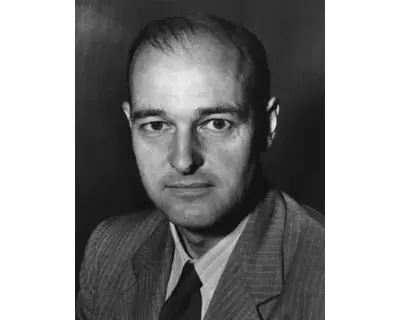
George Frost Kennan was an American diplomat and historian. He was best known as an advocate of a policy of containment of Soviet expansion during the Cold War. He lectured widely and wrote scholarly histories of the relations between the USSR and the United States. He was also one of the group of foreign policy elders known as "The Wise Men".
