Theodore Roosevelt Quotes
I am having my hair turned gray by dealing with the Russian and Japanese negotiators.
The President was spending all day and most of the evening with Japanese and Russian negotiators. He was trying to mediate an end to the Russo-Japanese War. Despite all the difficulties, Roosevelt found a new skill of personal international diplomacy. The war seemed intractable, but Roosevelt was able to get a peace treaty signed for which he was awarded the Nobel Peace Prize. It is doubtful that any modern president could spend so much concentrated time on an issue that was really not in the national interest of the United States. However, Roosevelt’s time and effort investment paid off in that by settling that dispute and getting nothing out of it for America or American business, the United States was in world opinion, elevated to a new status of fair, impartial and non-selfish international activity—a model that despite some lapses in later years, the United States has been unique.
Theodore Roosevelt, 1858-1919, 26th President of the United States (Republican, NY), Letter to his son, Kermit, August 25, 1905
Sourced by: Eigen's Political and Historical Quotations


Although Great Britain had abolished slavery, British economic interests during the Civil War suffered because of the northern blockade of the South. Much political opinion in England was hostile to the blockade policies of the Union. Bright, a great admirer and supporter of the United Sates and the Union cause was concerned that the United States might drift into War with Great Britain. His letter to Senator Sumner was written with the understanding that it would be in shared with President Lincoln, and it was actually read at a cabinet meeting.

The Conclusion of the Russo-Japanese War. The treaty was negotiated and signed in Portsmouth New Hampshire. President Theodore Roosevelt was awarded the Nobel Peace Prize for his mediating efforts. The language was typical of a peace treaty where just before its signature the two nations and their emperors were vilifying and dehumanizing the other.


Referring to the Peace between Japan and Russia which he had brokered and for which he had won the Nobel Peace Prize.

In the history of diplomacy and peace treaty negotiations, the various national representative would meet in secret, negotiate treaties and add secret clauses. Then the treaty was finally made public for approbal or ratification in the different countries no one would be told of the secret clauses. Each side would have a written secret copy of these clauses, but the publics of the country would never know. For example, the agreements about various WWII issues that were secret have not yet been made public in the United States or England. Wilson wanted to put an end to that diplomatic ploy and wanted all the peace treaty clauses to be public with nothing secret. He also wanted the deliberations to made in public woth press access. He had little support for the idea in most European nations.

When there is a serious problem with another country and it appears that military force may have to be used, he and most sophisticated policy makers argue that we should always try diplomacy first. If that does not work, then the military option is still open. If it does work, war or other military action is always available as an option. When politicians do not want to try diplomacy, it is usually that they have an ulterior motive for war and/or military force. Some urge caution with this principle in all cases as sometimes it gives the enemy time to regroup and rearm and he gets stronger by stringing out the negotiations with no intention of a diplomatic solution. In some other cases, as Iran in the second decade of the 21st century when they were suspected of developing a nuclear weapon. The Israeli right wing and some American conservatives wanted no delay in use of military force as that might allow the Iranians to complete an operational message. President Obama and most Americans favored strong economic sanctions with diplomacy first.


The Russians were breaking diplomatic relations with Israel.


to make international treaties or resolve international problems


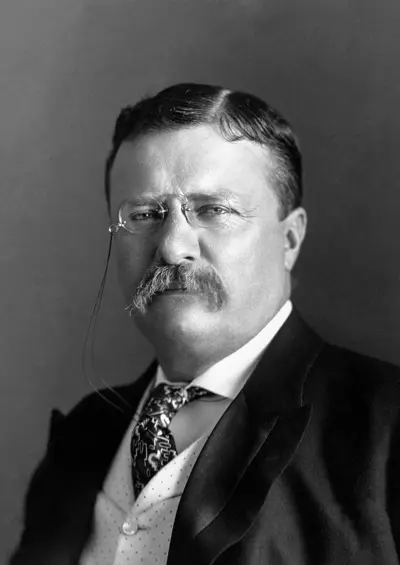
Theodore Roosevelt Jr., often referred to as Teddy or his initials T. R., was an American statesman, conservationist, naturalist, historian, and writer, who served as the 26th president of the United States from 1901 to 1909. He previously served as 33rd governor of New York from 1899 to 1900 and the 25th vice president of the United States from March to September 1901. Roosevelt emerged as a leader of the Republican Party and became a driving force for anti-trust and Progressive policies.
