Edward Mandell House Quotes
The President was determined to have his way, and the Senate were equally determined to have theirs. Unfortunately, the Senate had the power to compel the President to yield or lose confirmation of the Treaty, and equally unfortunately, he refused to give way. As far as his approach to the Senate was concerned, in my judgment, the President's purpose was impeccable but his manner unfortunate.
The majority of the country strongly favored American participation in the League of Nation provided there were some reservations that made it explicitly clear, the American troops could not be committed without the approval of Congress and that nothing would impinge on U. S. domestic sovereignty. Wilson wanted no exceptions or reservations to the treaty he had negotiated and would not compromise in any way. The issues were soon forgotten in what had become a test of will and power between the Senate and the President. The treaty was never ratified and without the United States, the League of Nations collapsed.
Edward Mandell House, 1858-1938, Army Colonel and Aide to President Wilson & President Taft, Description of the clash over the League of Nations, “The Running Sands”, Foreign Affairs, March 1923
Sourced by: Eigen's Political and Historical Quotations


This problem had not been resolved even by the beginning of the 21st century. With the inclusion of Hawaii as a state, there became 100 senators and the obstruction possibilities were even greater.


The Senate debate on the ratification of the Versailles Peace Treaty was difficult for President Wilson, who wanted the treaty ratified without reservations or exceptions:. Wilson would accept no reservations and the treaty was never ratified.


The President had negotiated the League of Nations as a part of the treaty negotiations ending World War I. However, he could not sell the idea to the Republican controlled Senate and the treaty was never ratified. This was the death of the League of Nations, a predecessor organization to the United Nations. America had gone into a period of extreme isolationism which in many way enabled WWII to get started. After WWII, the nation did not make the same mistake and the establishment of the United Nations was ratified handily. President Truman, however, was a much better salesman than President Wilson had been, and perhaps more important, the Republicans and Congress had never been involved in the League of Nations negotiations, whereas Truman had involved them heavily in a bipartisan effort.


President Coolidge had nominated Charles Beecher Warren as Attorney General but the Senate with his own party in the majority rejected the nomination as Warren had been closely connected with the Sugar Trust. Coolidge, refused to accept the Senate decision and renominated Warren and threatened that if the Senate would not confirm Warren, be would give him a recess appointment after the Senate adjourned:. The statement was written for a Senate speech but never delivered as such. Warren was rejected by the Senate a second time, and the President indeed offered him a recess appointment, but Warren refused.

From this quotation, {624648} and {615902} it is clear that the framers of the Constitution intended the treaty making powers to be shared by the President and the Senate. In practice, in modern times treaties are usually initially negotiated by diplomats under the supervision of the President and the Senate gets to concur or not in the ratification process. However, there have been a number of treaty failures including the League of Nations where the lack of coordination has resulted in a situation where the Senate had to accept or reject something which the President had negotiated and the Senate rejected the treaty.


Referring to the Senate's right to ratify treaties and the effect on negotiations,


Wolfe uses the term in the classic sense of appeasing Hitler or Stalin—appeasement of a powerful totalitarian force. However some politicians—usually at the extreme wings of the political spectrum—see any concession to political opponents as “appeasement”. Some, like the Tea Party Republicans of that era, regard any compromise as “appeasement”.
Senators have throughout our history used their power of treaty ratification to encroach on the executive branch and participate in the actual negotiations of treaties. President’s like McKinley to avoid non ratification actually appointed 3 senators to his 5 man treaty negotiating team. The 2/3 super majority is a high hurdle for ratification and presidents have always tilted with the Senate on treaties.

Indeed, the control is only one the medium term when after 4 years a President can be replaced by the voters. But a number of President’s have embarked upon foreign policies that was opposed by the majority of the population.


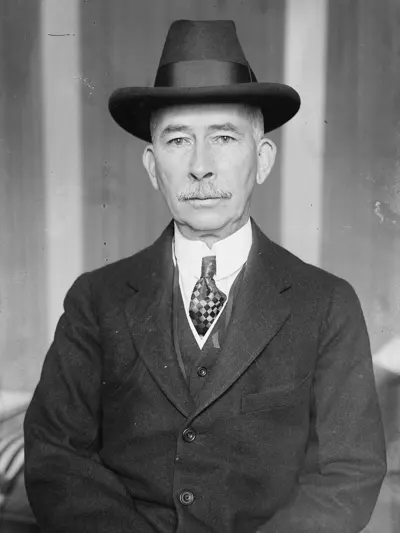
Edward Mandell House was an American diplomat, and an advisor to President Woodrow Wilson. He was known by the nickname Colonel House, although he had performed no military service. He was a highly influential back-stage politician in Texas before becoming a key supporter of the presidential bid of Wilson in 1912. Having a self-effacing manner, he did not hold office but was an "executive agent", Wilson's chief advisor on European politics and diplomacy during World War I (1914–18) and at the Paris Peace Conference of 1919. In 1919 Wilson, suffering from a series of small strokes, broke with House and many other top advisors, believing they had deceived him at Paris.
