William F. Patry Quotes
Treaties take away something that we take for granted—that you can change something the does not work. They stop us from fixing our mistakes.
Laws that do not work can be repealed by Congress with the President’s signature. However, if there is an international treaty, the United States may NOT change the laws to fix something that does not work. At best, the administration can try to re-negotiate the treaty, but has no power to assure the change unless, it withdraws from the treaty. However, most treaties are very complex and involve many elements and there is no way to withdraw from a single aspect of a treaty, even if it is a bad aspect.
William F. Patry, Copyright Scholar and Expert, Copyright Counsel to the U.S. House of Representatives, Interview, C-SPAN, Book TV, February 22, 2012
Sourced by: Eigen's Political and Historical Quotations


1st Earl of Beaconsfield. No matter what policies a government chooses, another government in the future might reverse that policy. Values and preferences of the people change and there is almost always pressure to change direction. As an example, President Harry D Truman first proposed national health insurance, The national policy was NO to such a health reform. But every Democratic President after Truman tried to change the policy. 60 years later, President Obama led the passage of a national health insurance system. However the Republicans immediately started repealing Obama’s plan. There has been and will be no finality on the health care national policy.


L. P. Jacks

Lodge was particularly concerned that under the proposed treaty the United States would be obligated to support the League of Nations military efforts regardless of American public opinion or Congressional action.


Individual countries are bound only by the treaties and compacts that they have signed and ratified. So very often someone will allege that a country has violated international law, but that nation may not have signed the Treaty or Compact that binds them, so thy may not be in violation at all whereas some other country in similar circumstances would be. Also, many countries (including the United States) sign treaties but take exception to some of the provisions. Then there are not bound by that provision. This is what makes International Law so complicated and difficult to understand.

The Republican controlled Senate had turned down the ratification of the League of Nations presented by Democratic President Wilson, and looked like they would turn down any international treaty even if presented by a Republican President. This statement allowed the treaty ratification by only a few votes. However, after that the Senate turned down our participation in the Permanent Court of Arbitration at the Hague. See {640099}.


The President was spending all day and most of the evening with Japanese and Russian negotiators. He was trying to mediate an end to the Russo-Japanese War. Despite all the difficulties, Roosevelt found a new skill of personal international diplomacy. The war seemed intractable, but Roosevelt was able to get a peace treaty signed for which he was awarded the Nobel Peace Prize. It is doubtful that any modern president could spend so much concentrated time on an issue that was really not in the national interest of the United States. However, Roosevelt’s time and effort investment paid off in that by settling that dispute and getting nothing out of it for America or American business, the United States was in world opinion, elevated to a new status of fair, impartial and non-selfish international activity—a model that despite some lapses in later years, the United States has been unique.

England in this quotation claims the right to interfere in the internal affairs of another nation if there is mismanagement or crises AND her national interests are affected.

to make international treaties or resolve international problems


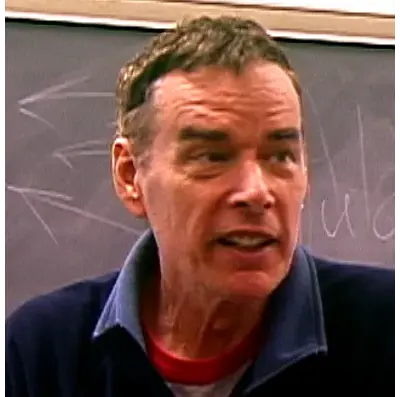
William F. Patry is an American lawyer specializing in copyright law. He studied at the San Francisco State University, where he obtained a B.A. in 1974 and an M.A. in 1976, and then at the University of Houston, where he graduated with a J.D. in 1980. He was admitted to the bar in Texas in 1981, in the District of Columbia in 2000, and in New York in 2001.
