Wilhelm II, German Emperor Quotes
Europe had to be thankful to you that you so quickly had perceived the great future for Russia in the cultivation of Asia and in the Defense of the Cross and the old Christian European culture against the inroads of the Mongols and Buddhism.
The two were cousins. Wilhelm was a very dominant personality and his cousin quite weak. This quotation shows the tyrannical view of the German Kaiser. The letters were secret but after the execution of the Czar, the Russians released the letters to show the dominant and warlike history of Germany under the Kaiser who was furious that the Russians had made such personal and secret letters public. Russia was in conflict with Japan in what would be called the Russo-Japanese War. The racist views of the German aristocracy was shared with respect to Asians in remembrance of the Mongol invasions of Russia.
Wilhelm II, 1859-1941, Emperor of Germany & King of Prussia, Letter to Czar Nicholas of Russia, July 10, 1895
Sourced by: Eigen's Political and Historical Quotations

The Teutons were the Germanic tribes who were very warlike. His prediction of German war and aggression was demonstrated by WWI and WWII. The French Revolution diminished the influence of religion throughout Europe.

The two were cousins. Wilhelm was a very dominant personality and his cousin quite weak. This quotation shows the tyrannical view of the German Kaiser. The letters were secret but after the execution of the Czar, the Russians released the letters to show the dominant and warlike history of Germany under the Kaiser who was furious that the Russians had made such personal and secret letters public. Russia was involved with the Russo-Japanese war. Both the Russian and German aristocracies had designs on dominating Asia for the memories of the Asian invasions of Europe were still alive.

At the time, the major European countries were in a competitive scramble for colonies in Africa—so much so that there were very few independent territories left. The maps and borders of Africa were really decided by the Europeans.

He was the scientist most responsible for the Pakistani nuclear bomb capability. However, he took his technological knowledge and without the knowledge of his government and contrary to their promises to the United States and other nations, accepted large secret payments to assist third world dictatorships to begin a nuclear weapons program. When he was caught, he was arrested but he is one of the very few world class scientists that Pakistan had ever had and was one of the most famous and popular Pakistani figures. The Pakistani Supreme court ruled that he was free to move about Pakistan but may not leave the country, and he is supposedly monitored to prevent his sharing nuclear secrets with terrorists and dictatorial states. In 2012 he formed his own political party.


The then Attorney General had established a back channel to the Russian agent. There was genuine fear by the Russians and some in America that there were still many Nazis and German nationalists who would try and influence, if not take over, German politics to produce another aggressive German fascist state. The Russians had lost 22 million citizens to the Germans in the war and had faced a defeated Germany where virtually every German over the age of 30 had been cheering for and supporting Hitler a decade ago. Neither the Russians nor we and the other allies had not yet seen the remarkable turn-around that the German nation would make and the intense anti-fascist, non-military ethos that would be brought by the younger German generations. The direction of Germany was then very unpredictable.


While the American Civil War was raging, Pinyin Hong Xiuquan started a quasi Christian religion (he claimed to be the brother of Jesus Christ) in China which initiated a war of extermination with the Manchus and other religions. More than 20 million Chinese were killed in a religious war that proportionately killed more Chinese than the Nazis killed in Europeans. Though hardly noticed in America and Europe, the religious war of extermination had been so traumatic that dissident religions are the most feared problem by Chinese modern leaders—more so than Capitalists, Taiwan or any of the modern ‘enemies’. It is the Falun Gong and the Tibetan Buddhists who the leadership fear might grow into another Yellow Turban movement—the worst Trauma of Chinese History—even worse than the Japanese WWII invasion. Hence the irrational view of the Chinese leadership towards religions they cannot control. See {612649} and {612649}. In Western terms as Wiesel put it, the Chinese leadership suppression of Tibet makes little or no sense, but current Chinese leadership is paranoid as a result of its history.

Ottoman Turkish Sultan Mehmed II Aeneas Sylvius Piccolomini. 6 years earlier, the Ottoman Turks, had captured Byzantium (Constantinople, later Istanbul), the capital of the Eastern Roman Empire. The Pope had called together the rulers and leaders of Christendom to organize a common defense in this war of civilizations. This was the period where Christian Islamophobia began. The Muslims had a religious duty to convert the rest of the world to Islam and adopt Islamic law (Sharia). However, so did the Christians. Sultan Mehmed II, when he conquered Byzantium, did not require the conversion of the Christians in the great city. He took the greatest churches, but by and large left the Christians to worship in their own Churches. The Muslims at the time were far more tolerant of Christians (and Jews) than the Christians were of Muslims (and Jews). Like in the 21st century, there was much Islamic doctrine and reality to be worried about, but not all the Muslims were as rabid and extreme as Eastern paranoia suggested in the 15th century or the 21st.


A few months later, that is exactly what Germany did. She was hoping that England would not enter the war despite her treaty obligations, but she was willing to risk the possibility. The Czar had a strong espionage and intelligence service active in Germany, but, like so many other intelligence failures, the intelligence operatives and analysts had military and economic facts but had little understanding of the German culture which propelled Germany to what to most other cultures was “irrational policy making.” People and nations often engage in irrational activities, even against their own self-interest.
This quotation is important for two reasons. First, it shows that there was a very hostile environment in Europe well before the assassination of the Archduke of Austria that “triggered” WWI. Second, that the Germans were racist before Hitler ever came on the scene. The Emperor demagogued the issue and took it to new extremes, but the evil was there. To the Germans, the Slavs and Russians were a lesser form of humanity than the Germans. The Austrians were threatening to attack Serbia and Russia. The Austro-Hungarian Empire, ruled many ethnic Slavs, Russians and Muslims—the lower forms of humanity—and long before Hitler, Wilhelm and other leading Germans thought that the Germanic Peoples should rule that part of the world as the lesser “races” were not fit to rule.
Russia was expansionistic even before the 1914 Russian Revolution with the Communists prevailing. I this case, they had designs on Korea. However, so did Japan and the two would fight in the Russo-Japanese War. Of course neither were concerned with what the Koreans wanted which was independence.
At that time, Russia and Germany were autocracy, and the ruler could simply take the English money and force the soldiers to fight in a war they had not stake in nor understood.

Kiev is the largest city and capital of Ukraine.

Nixon was the ultimate pragmatist and used secrecy wherever he felt it might give him an advantage. His logic was that in the American system, the Judicial Branch was the only set of people who could pronounce something illegal. If the issue were secret, the judges could not see it, and therefore could never declare it illegal.

The Papacy was at one of it’s lowest points. Two men, Clement and Urban, both claimed the Papacy and each had raised an army to fight the other. Each was promising indulgences to those who would fight, and in a modality similar to the Muslim terrorists of the 21st century, the soldiers were promised ascendancy to Heaven if they fell in battle for such a holy cause. The armies of the popes marched under the cross as their banner, and Wycliffe found that obscene and actually wrote a treatise saying so. See {618087}.
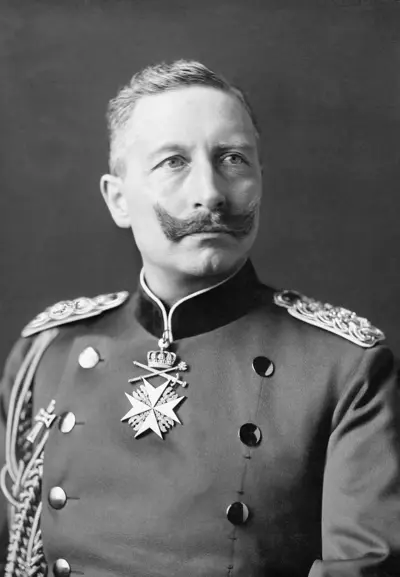
Wilhelm II, anglicised as William II, was the last German Emperor (Kaiser) and King of Prussia, reigning from 15 June 1888 until his abdication on 9 November 1918. Despite strengthening Germany's position as a great power by building a blue-water navy and promoting scientific innovation, his tactless public statements greatly antagonized the international community and his foreign policy was seen by many as one of the causes for the outbreak of World War I. When the German war effort collapsed after a series of crushing defeats on the Western Front in 1918, he was forced to abdicate, thereby bringing an end to the three-hundred-year rule of the House of Hohenzollern.
