Richard Nixon Quotes
If it’s secret, it’s legal.
Nixon was the ultimate pragmatist and used secrecy wherever he felt it might give him an advantage. His logic was that in the American system, the Judicial Branch was the only set of people who could pronounce something illegal. If the issue were secret, the judges could not see it, and therefore could never declare it illegal.
Richard M. Nixon, 1913-1994, 37th President of the United States (Republican, CA), Quoted in Tim Weiner, Legacy of Ashes: The History of the CIA, 2007
Sourced by: Eigen's Political and Historical Quotations


He was referring to the massive surveillance NSA program whereby all telephone calls and most digital communications for every American was secretly tapped and stored in an NSA data base. The Senators of the Intelligence Oversight Committee received information in Classified executive sessions but they were not allowed to disclose anything that they learned in the briefings—even something as huge and probably unconstitutional as this program. Moreover, even when officials of the Intelligence Services lied under oath (see {634917}) in open session, the Senators could not disclose this fact.


Agree resigned from the CIA in protest to its political position.


This is a major issue for the nation. How can the president be responsible if he is not informed? However, some argue that the President must have “plausibility deniability” so he can deceive foreign leaders without lying to them. The laws require that nothing may be withheld from the President but there are some in the agency including past directors who believe that they sometimes should lie to the President or withhold information when it is in the national interest—which of course only they judge without any checks and balances.


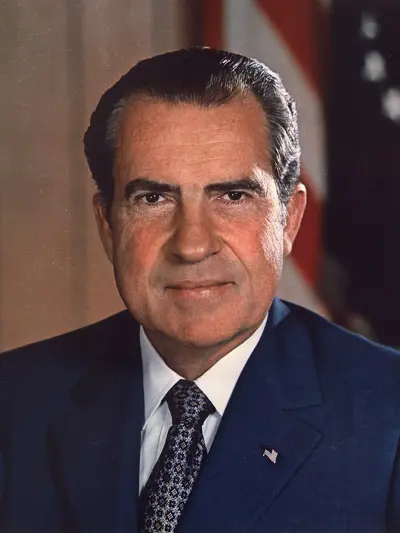
Richard Milhous Nixon was the 37th president of the United States, serving from 1969 to 1974. A member of the Republican Party, Nixon previously served as the 36th vice president from 1953 to 1961, having risen to national prominence as a representative and senator from California. After five years in the White House that saw the conclusion to the U.S. involvement in the Vietnam War, détente with the Soviet Union and China, and the establishment of the Environmental Protection Agency, he became the only president to resign from the office, following the Watergate scandal.
