David Remnick Quotes
Russian history began in Kiev, not in Moscow.
Kiev is the largest city and capital of Ukraine.
David Remnick, Political Writer & Journalist, Editor, The New Yorker, Explanation as to why the Ukraine is so important to the Russians, Interview, PBS The Charlie Rose Show, February 26, 2014
Sourced by: Eigen's Political and Historical Quotations


This was his major justification for occupying and annexing the Crimea. He had a good historical point. The Crimea had been a part of Russia for centuries, and many Russians had died defending it over the years. At the high pont of the strength of the Soviet Union, the Soviet leadership reorganzied the "states" of the nation and placed the Crimea in the State of Ukraine -- which they also considered part of Russia and from where the great Russian hero, Alexander Nevsky came and unified Russia. When the Soviet Union broke up, Ukraine became an independent coutry and assumed Crimea belonged to it, based in the last administrative reorganization of the area before the break-up. However, most of the commerce in Crimea was with Russia proper and not Ukraine. And the Crimeans were mostly ethnic Russians or Taters--a minority who had no historical or cultural ties to Ukraine. Neither group spoke Ukrainian much. 90 percent of the Crimeans wanted to Remain with Russia and not be part of Ukraine. This was the main reason that the Russians were so easily able to send armed soldiers in civillian dress into Crimea to size the territory--the vast majority of the indigineous Crimean poluation wanted them there and strongly favored annexation claiming that they had the right as American President Woodrow Wilson put it to "self determination". Bit Ukraine would hot allow a formal plebicite. So Russia sized Crimea, had the plebicite, and based on the results and the desires of Putin and the Russian leadership, annexed Crimea.

During the Cold War and afterwards many Americans attributed the problems we were having with the Soviet Union emenated from the fact that they were Communists, and our focus was anti-communism. Kennen, however argued that it was not Communism that was the cause of the Aggression of the Soviet Union. It was an extension of the Russian Culture. After the Soviet Union collapsed, and Communism was rejected by the Russians, we still had a great deal of Russian aggression and Foreign Policy problems with Russia. Kennan was right. It was the Russian culture, history, values and traditions that were the primary cause of most of the problems with Russia.


Historically Ukraine has been not only a part of Russia but a key part. The first Russian leader who unified the Russian nation and fought off the Mongols and Roman Catholic Western invaders came from the Ukraine. The origin of the Russian Orthodox Church was in the Ukraine. And the people of the Ukraine played a central and pivotal role in the Russian Revolution. And in World War II, despite a minoirty of Ukrainian nationalists who fought with the Nazis, the Ukraine bore much of the brunt of the German onslaught and the 22 million Russians who were killed, and yet fought so well that the Nazis were defeated. Many of the great Russian Heroes have been from the Ukraine. From the Russian point of view, Ukraine, was noi less a part of Russia than Florida, Iowa or Nebraska were to the United States.


The one area where communists were successful was in fighting for the Russian Homeland in WWII and the subsequent assault on Germany from the East. Most American military experts did not believe that the Russians could hold out. However with American weapons and supplies they proved most effective in causing German casualties. The Russians, however, had lost 22 million soldiers and civilians—a fearful cost. But the Communists proved they could lead a nation at war, and this success bought them 50 years of acceptance from the Russian people before their inability to manage a civilian society finally became clear and the Soviet Union collapsed.


This was an incredible prediction with no other world leader thinking it possible for decades until that is exactly what happened.
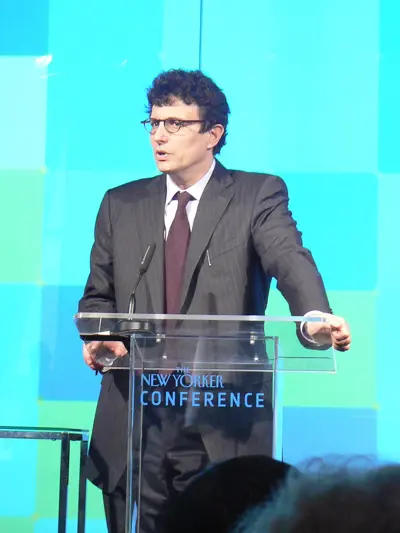
David J. Remnick is an American journalist and writer. He won a Pulitzer Prize in 1994 for his book Lenin's Tomb: The Last Days of the Soviet Empire and is also the author of Resurrection and King of the World: Muhammad Ali and the Rise of an American Hero. Remnick has been editor of The New Yorker magazine since 1998. He was named Editor of the Year by Advertising Age in 2000. Before joining The New Yorker, Remnick was a reporter and the Moscow correspondent for The Washington Post. He also has served on the New York Public Library board of trustees. In 2010, he published his sixth book, The Bridge: The Life and Rise of Barack Obama.
