Marvin Kalb Quotes
Well, we have got to understand, for example, Russia is an orthodox Christian nation. So is Ukraine. That happened in 988 in Crimea, a place called Kievan Rus, which was the Russia around Kiev at that time. It's 1,000 years ago, but, to a Russian, it's yesterday.
Kalb, Marvin. Interview. PBS NewsHour, Public Broadcasting Service, 2015.

Kiev is the largest city and capital of Ukraine.

This was his major justification for occupying and annexing the Crimea. He had a good historical point. The Crimea had been a part of Russia for centuries, and many Russians had died defending it over the years. At the high pont of the strength of the Soviet Union, the Soviet leadership reorganzied the "states" of the nation and placed the Crimea in the State of Ukraine -- which they also considered part of Russia and from where the great Russian hero, Alexander Nevsky came and unified Russia. When the Soviet Union broke up, Ukraine became an independent coutry and assumed Crimea belonged to it, based in the last administrative reorganization of the area before the break-up. However, most of the commerce in Crimea was with Russia proper and not Ukraine. And the Crimeans were mostly ethnic Russians or Taters--a minority who had no historical or cultural ties to Ukraine. Neither group spoke Ukrainian much. 90 percent of the Crimeans wanted to Remain with Russia and not be part of Ukraine. This was the main reason that the Russians were so easily able to send armed soldiers in civillian dress into Crimea to size the territory--the vast majority of the indigineous Crimean poluation wanted them there and strongly favored annexation claiming that they had the right as American President Woodrow Wilson put it to "self determination". Bit Ukraine would hot allow a formal plebicite. So Russia sized Crimea, had the plebicite, and based on the results and the desires of Putin and the Russian leadership, annexed Crimea.


This vision, known as "The Third Rome" saw not only Moscow as the seat of Christianity for the world, but saw the Czar as the Head of the Christian unified Church. Constantinople had fallen to the Muslims and Rome to the Barbarians and the Pope had virtually no power at the time. Particularly interesting is his vision of transforming a civil Emperor to the head of the Church—one who was strong and wealthy enough to end the schism of the Eastern and Western Churches and command all. In this sense, he was following the Muslim concept of a single secular and religious, all powerful, leader—like the Caliph.


There is a school of thought that since Jesus Christ preached care for the poor and have-nots that he was a socialist. Others believe that this is simply a commonality between some of the teachings of Christ and some aspects of socialism. The irony is that Chavez’s brand of socialism and polarization of society was in very large part contrary to Christ’s teachings, though there have been few governments that had ever met Christ’s standards of morality including and especially Christian, church-dominated government’s and theocracies.


It was true that the majority of the citizens of Crimea in 2014 preferred to be a part of Russia than the Ukraine. So the Russians sized the Crimea, had an election and when the vast majority of the Crimeans voted for Russian affiliation, they annexed the Crimea under the principle of self-determination. However, Russia has two of its states with Muslim majorities that prefer to affiliate with one of the majority Muslim nations in the area. But the hypocrisy of the Russians became clear when they would not allow those two states to have elections. The Russian policy seemed to be that whatever is part of Russia is non-negotiable and not subject to self-determination, but whatever borders on Russia that is not part of Russia is entitled to an expression of self-determination and independence of other affiliation if they want. The Crimea had the only warm water port in the Soviet Union; they had a deal with the Ukrainians that their navy could use the port. However, they felt that Western support for the new Ukrainian government was the first step in ousting Russia from that port.

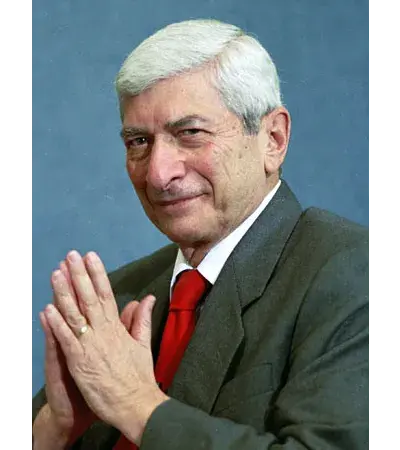
Marvin Leonard Kalb is an American journalist. Kalb was the founding director of the Shorenstein Center on Media, Politics and Public Policy and Edward R. Murrow Professor of Press and Public Policy from 1987 to 1999. The Shorenstein Center and the Kennedy School are part of Harvard University. He is currently a James Clark Welling Fellow at George Washington University and a member of the Atlantic Community Advisory Board. He is a guest scholar in Foreign Policy at the Brookings Institution.
