Angela Stent Quotes
The wars in Georgia and Ukraine and the annexation of Crimea have represented, in part, Russia's answer to its perceived exclusion from the post-Cold War European Security Order.
Angela Stent, National Intelligence Officer for Russia and Eurasia, Director of its Center for Eurasian, Russian, and East European Studies., Senior Fellow, Brookings Institution, "Putin's Power Play in Syria: How to Respond to Russia's Intervention", Foreign Affairs, January / February 2016
Sourced by: Eigen's Political and Historical Quotations

It was true that the majority of the citizens of Crimea in 2014 preferred to be a part of Russia than the Ukraine. So the Russians sized the Crimea, had an election and when the vast majority of the Crimeans voted for Russian affiliation, they annexed the Crimea under the principle of self-determination. However, Russia has two of its states with Muslim majorities that prefer to affiliate with one of the majority Muslim nations in the area. But the hypocrisy of the Russians became clear when they would not allow those two states to have elections. The Russian policy seemed to be that whatever is part of Russia is non-negotiable and not subject to self-determination, but whatever borders on Russia that is not part of Russia is entitled to an expression of self-determination and independence of other affiliation if they want. The Crimea had the only warm water port in the Soviet Union; they had a deal with the Ukrainians that their navy could use the port. However, they felt that Western support for the new Ukrainian government was the first step in ousting Russia from that port.


The issue of unilateral or multilateral foreign policy efforts faced America after WWII.


He was discussing the conflict in the Ukraine between keeping their historical economic relationships with Russia and being more involved with Europe and the West. He observed that the Ukraine has been for centuries not only and integral part of Russia but played a huge role in the Russian Revolution of 1917. Kissinger urged Ukraine independence and relations with both Russia and Europe and not making the Russians feel that they have little or no influence over what was not very long ago a critical part of their country.

After the economic & power collapse of the Soviet Union, the United States was the only remaining superpower. Givern Russia's diminshed capability and many Americans still carrying resentments about the Cold War, America's foreign policy and diplomacy did not treat Russia as if they were a very important power in the world. Puten greatly resented the fact that Russia was no longer considered or treated like a world power, Russia had a nuclear arsenal and a total delivery system what was in the same destructive potential class as the United States. There were many Russiabs who had similar resentments and Putin sert out to adopt policieis and practices that would force the United States and the other nations to consider them with more dignity, respect and consdideration. This was a typical statement of the period when he was "stoking the fires of Russian resentment.


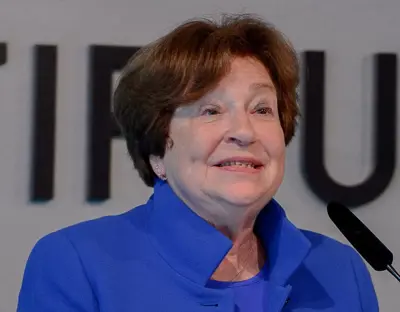
Angela E. Stent is a foreign policy expert specializing in US and European relations with Russia and Russian foreign policy. She is Professor of Government and Foreign Service at Georgetown University and director of its Center for Eurasian, Russian, and East European Studies. She is also a non-resident senior fellow at the Brookings Institution. She has served in the Office of Policy Planning in the US State Department and as National Intelligence Officer for Russia and Eurasia.
