Karl Marx Quotes
Despite all its shortcomings, this Constitution looms against the background of Russo-Prusso-Austrian barbarism as the only work of liberty which Eastern Europe has ever created independently, and it emerged exclusively from the privileged class, from the nobility. The history of the world has never seen another example of such nobility of the nobility.
Karl Marx, 1818-1883, German Economist & Socialist, Comment on the Polish Constitution of May 3, 1791
Sourced by: Eigen's Political and Historical Quotations

To many of us the notion of liberty and aristocracy and nobility are contradictory. However, at the time, the nobility, unlike most Poles, were literate and educated and had followed the U. S. Constitution adoption. And this Constitution was created with the Nobility being one of the driving forces. See {585394}.


He was opposed to the existing Fijian constitution but could not muster enough political support to amend it. He therefore stated that he would ignore it. He was overthrown by a coup several weeks later. One provision that was particularly vexing to him was communal voting, which reserved almost two-thirds of the seats in the House of Representatives for persons registered on ethnic electoral rolls; this tended to polarize the nation and gave foundation to politicians with extreme views

In the late 1830's a revolutionary political movement of small tenant farmers grew in upper New York State. There was much violence and anti-renters were hanged and jailed. After a few years they elected 14 members of the state legislature and had their fellows pardoned:


Majority public opinion does not always prevail in a modern democracy as there are Constitutional limits on the prerogatives of the majority. Also leadership has played a strong role in America’s development where strong leaders have been able to do the right thing despite contrary public opinion.


The version of the Constitution they were debating did not include the Bill of Rights.

The day that most changed the course of history was


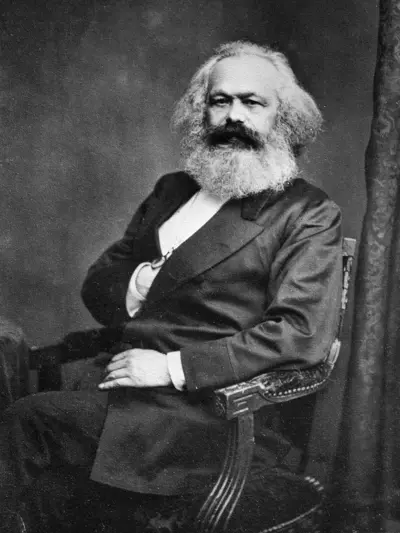
Karl Heinrich Marx was a German philosopher, economist, historian, sociologist, political theorist, journalist and socialist revolutionary. Born in Trier, Germany, Marx studied law and philosophy at university. He married Jenny von Westphalen in 1843. Due to his political publications, Marx became stateless and lived in exile with his wife and children in London for decades, where he continued to develop his thought in collaboration with German thinker Friedrich Engels and publish his writings, researching in the reading room of the British Museum. His best-known titles are the 1848 pamphlet The Communist Manifesto and the three-volume Das Kapital (1867–1883). Marx's political and philosophical thought had enormous influence on subsequent intellectual, economic and political history. His name has been used as an adjective, a noun, and a school of social theory.
