Richard Henry Lee Quotes
It cannot be denied with truth, that this new constitution is, in its first principles, most highly and dangerously, oligarchic.
The version of the Constitution they were debating did not include the Bill of Rights.
Richard Henry Lee, 1732-1794, Member of the Continental Congress, Signer of the Declaration of Independence, U.S. Senator (VA) Statement of opposition to ratification of the Constitution, 1787
Sourced by: Eigen's Political and Historical Quotations


1st Baron Macaulay

This quotation illustrates the "winner take all" conceopt of many political cultures that call themselves and think of theselves as a democracy. But a true democracy does not allow a tyranny of the majority--especially a very narrow minority.


They were setting of the first government of the United States according to the new Constitution.


This letter was written shortly after the Constitution had been signed by the convention delegates. This difference between Adams and Jefferson would be at the heart of the first great partisan struggle in American history. Adams, as the second President, tried to increase and use the power of the Presidency. Jefferson opposed him, especially when Adams tried to run for a second term. The Adams-led Federalists were pitted against Jefferson’s Democratic Republicans in the first, and perhaps still the most bitter partisan struggle in American political history. The Jeffersonians accused Adams and the Federalists of trying to unravel the American Revolution and revert to a monarchy. The people not only sided with the Democratic Republicans, ousting Adams, but also turned out most of the Federalists. It was the end of the Federalist Party, and a new conservative party—without monarchial tendencies—the Whigs became the new opposition party.
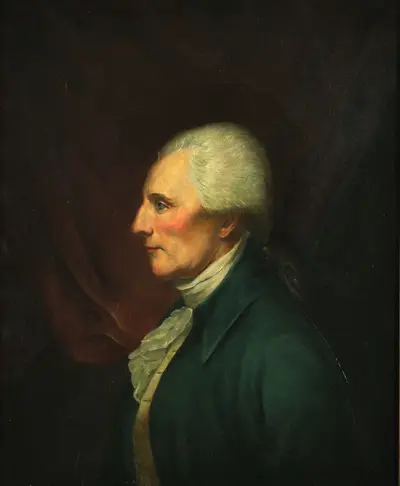
Richard Henry Lee was an American statesman and Founding Father from Virginia, best known for the June 1776 Lee Resolution, the motion in the Second Continental Congress calling for the colonies' independence from Great Britain leading to the United States Declaration of Independence, which he signed. He also served a one-year term as the President of the Continental Congress, was a signatory to the Articles of Confederation, and was a United States Senator from Virginia from 1789 to 1792, serving during part of that time as the second President pro tempore of the upper house.
