William Henry Harrison Quotes
Republics can commit no greater error than to adopt or continue any feature in their systems of government which may be calculated to create or increase the lover of power in the bosoms of those to whom necessity obliges them to commit the management of their affairs.
William Henry Harrison, 1773-1841, 9th President of the United States (Whig, OH), Inaugural Address, March 4, 1841
Sourced by: Eigen's Political and Historical Quotations


While this may have been true in some European nations, many disagree completely with this assertion for America. They point to the thousands of laws passed by Congress to cut back or diminish the power that they had earlier given the agency. These counter-examples to Hayek’s view are particularly evident after most wars. What often does happen is that Congress votes a temporary power to a government agency, and when the temporary power time is coming to an end, many citizens and officials are so happy with the result of granting the power, that the power is then granted permanently, sometimes to the distress of some legislators who voted for the power with the understanding that it would be temporary. However, Congress may, and often does, change its collective mind. Coercion to Hayek includes for example, taxation if there are criminal penalties for failure to pay the tax or regulation where a government agency may require or prohibit certain behavior of a business or individual and most people would agree that even in a democracy there are coercive aspects of much government activity.


The version of the Constitution they were debating did not include the Bill of Rights.
This is the major factor in many nations trying to shift to a democracy from a totalitarian form of government. The winners assume that they can now do anything without regard for the minority rights of opinions.


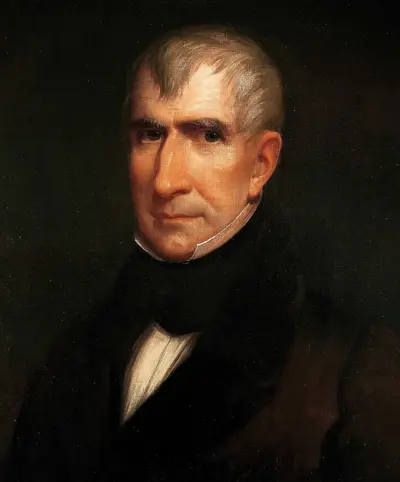
William Henry Harrison was an American military officer and politician who served as the ninth president of the United States for 31 days in 1841, becoming the first president to die in office and the shortest-serving U.S. president in history. His death sparked a brief constitutional crisis regarding succession to the presidency.
