Anthony Trollope Quotes
People seem to think that if a man is a Member of Parliament he may do what he pleases.
Anthony Trollope, 1815-1882, British Novelist, The Belton Estate
Sourced by: Eigen's Political and Historical Quotations

1st Earl of Oxford. Technically the title of Prime Minister was then non-existent, but he performed the function. Unlike America where the Chief Executive is elected for fixed 4 year terms, in England and other parliamentary democracies, if the Prime Minister cannot command a majority of the Praliament, he has to call new elections. Even if he cannot maintain the majority of his own party, he can be replaced by a simple vote of the members of the parliament of his own party. Margaret Thatcher for example, was never defeated at the polls in an election. She was thrown out of office by her own party.

as a result of the Watergate hearings and investigations and proceedings


This was Executive Privilege of the time. The result of this type of conflict between the executive and the legislative body was a Civil War in which Parliament won. This concept of executive privilege operates to this day in America where the President typically refuses to have his special assistants and staff be questioned by Congressional investigating committees. IT also extends to documents where the President has refused to allow Congress access to papers. In the Watergate scandal, it was the Supreme Court Decision that President Nixon could not claim Executive Privilege with respect to the Watergate tapes. Their exposure forced his resignation.


He was referring to a transportation bill that had been packed with earmarks and pork by his own party.

The colonists in America had no representatives in Parliament. Galloway who opposed armed rebellion against Britain {621966} admitted that the British treatment of America was wrong but saw other solutions. It will never be known if any of them might have worked. The world would have been very different had they been tried.

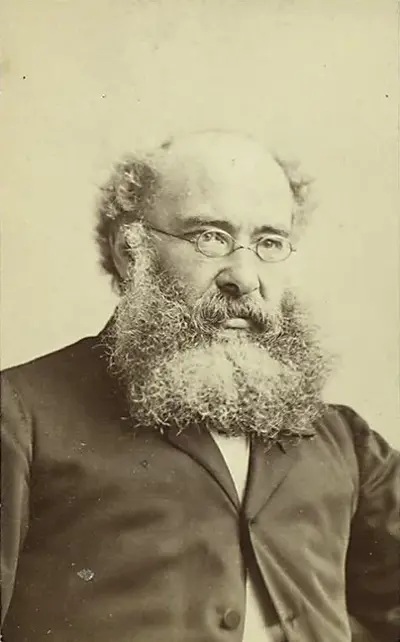
Anthony Trollope was an English novelist and civil servant of the Victorian era. Among his best-known works is a series of novels collectively known as the Chronicles of Barsetshire, which revolves around the imaginary county of Barsetshire. He also wrote novels on political, social, and gender issues, and other topical matters.
