Charles de Gaulle Quotes
A constitution is made of a spirit, institutions, and a practice.
Charles De Gaulle, 1890-1970, French President, Press Conference, Élysée Palace, January 31, 1964
Sourced by: Eigen's Political and Historical Quotations


The English Constitution is not as binding on the English government as is the Amercan Constitution. In the English system, the government in power can override the constitution although the rarely do so out of respect for the system. In America, the Constitution is much more controlling and hence would be seen to count for more. In many third world countries, the ruler can “suspend” the constitution in a national emergency.


Despite Ziglar’s and other officials pointing out the illegality, illegal sweeps and arrests were made without warrants or constitutional requirements.


There are many countries that adhere to a rule of law, for which their Constitution is the fundamental document providing a framework for their legal system which is adhered to. A few nations which are strong adherents to the rule of law, but have no constitution; the instead have a very strong system of Common Law which establishes their legal precedents and a legislative tradition of restraint which provides fixed principles (Great Britain and Israel are two good examples). But the biggest problem for many countries in not adhering to the rule of law, is having a written constitution and then ignoring it when making legal decisions for the nation, Balaguer’s quotation here is typical of the attitude which causes nations with fine constitutions to function without any serious adherence to rule of law.


Anthony Ashley Cooper


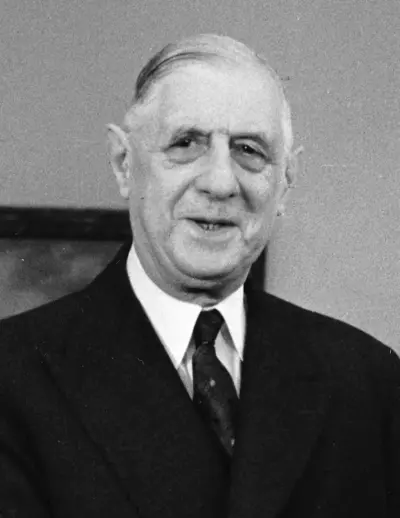
Charles André Joseph Marie de Gaulle was a French army officer and statesman who led Free France against Nazi Germany in World War II and chaired the Provisional Government of the French Republic from 1944 to 1946 in order to reestablish democracy in France. In 1958, he came out of retirement when appointed President of the Council of Ministers (Prime Minister) by President René Coty. He rewrote the Constitution of France and founded the Fifth Republic after approval by referendum. He was elected President of France later that year, a position to which he was reelected in 1965 and held until his resignation in 1969.
