Benjamin Rush Quotes
The American war is over; but this far from being the case with the American revolution. On the contrary, nothing but the first act of the drama is closed. It remains yet to establish and perfect our new forms of government, and to prepare the principles, morals, and manners of our citizens for these forms of government after they are established and brought to perfection.
Benjamin Rush, 1745-1813, Physician & member of the Continental Congress, Surgeon General of the Continental Army and Treasurer of the U.S. Mint, Letter to Price, May 25, 1786
Sourced by: Eigen's Political and Historical Quotations


He and Thomas Jefferson were the two most vocal propononents of this view amongst the Founding Fathers.


Tamoyo ceased publication in 1823. It’s name comes from the name of an indigenous Indian tribe. A region of Brazil has been given the same name.

Based on this statement, the coup came to be called “The Gentlemen’s Coup.”


Ataturk was one of the few revolutionary leaders who appreciated the importance of maintaining a Republic over time and allowed for the possibility that the revolutionary government might become corrupt. So like Thomas Jefferson, he always told citizens to be ever vigilant. In the case of Turkey, on several occasions fundamentalist religious forces have attempted to regain control of the secular republic and the government and mindful of Ataturk’s warnings the Army and other forces have rallied to keep Turkey independent and secular.


Majority public opinion does not always prevail in a modern democracy as there are Constitutional limits on the prerogatives of the majority. Also leadership has played a strong role in America’s development where strong leaders have been able to do the right thing despite contrary public opinion.


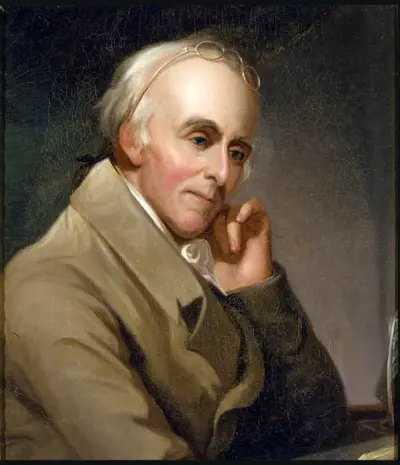
Benjamin Rush was a signer of the United States Declaration of Independence and a civic leader in Philadelphia, where he was a physician, politician, social reformer, humanitarian, and educator and the founder of Dickinson College. Rush attended the Continental Congress. His later self-description there was: "He aimed right." He served as Surgeon General of the Continental Army and became a professor of chemistry, medical theory, and clinical practice at the University of Pennsylvania.
