Vladimir Zhirinovsky Quotes
Russia is an Eastern Orthodox country.

This vision, known as "The Third Rome" saw not only Moscow as the seat of Christianity for the world, but saw the Czar as the Head of the Christian unified Church. Constantinople had fallen to the Muslims and Rome to the Barbarians and the Pope had virtually no power at the time. Particularly interesting is his vision of transforming a civil Emperor to the head of the Church—one who was strong and wealthy enough to end the schism of the Eastern and Western Churches and command all. In this sense, he was following the Muslim concept of a single secular and religious, all powerful, leader—like the Caliph.


The church attempted to retain its role as the premier Russian religion, and maintain its traditional influence and autonomy. It was not to be.


“Mormon” is a nickname for members of “The Church of Jesus Christ of Latter-day Saints.” Romney was a Mormon who was running for the Republican Presidential nomination. There remains a good deal of anti-Mormon religious bigotry in the nation.


In 1453 the Ottoman Turks shocked Christendom by capturing Constantinople, the capital of the Byzantine Eastern Christian Empire. It was always perceived as a religious conflict between Christians and Muslims but that is an over simplification of a very complex sociological, religious, and political historical period. As this quotation shows us there were many Christians aiding the Muslim side. There were also many Muslims fighting on the Christian side.
In this speech, and in {634756}, he argued against unification to a public that was mostly opposed. The leadership was interested because they were facing the Muslim Ottoman Turks who were getting more powerful each day. The Eastern Emperor, Constantine XI, more of a soldier and politician than a cleric, wanted the military strength of the Franks and other Western European Christian armies to help protect the Eastern Empire and Byzantium and were willing to reunite under the Pope to get it. Gennadios and his faction were not. They prevailed and the next year, the Muslims conquered Byzantium which had little help from the armies of the Western Roman Empire.
The Christian Roman Empire was split in two—a Western (Latin) Empire led by the Roman Catholic Church in Rome, and the Eastern (Greek) Roman Empire led by the Orthodox Church headquartered in Constantinople (Byzantium). The two churches were not only in a theological conflict but violence broke out and the armies of the two religious empires attacked each other now and then. In 1439, leader of the two versions of Christianity met in Florence, and they agreed to reunuion in which the Eastern Orthodox would again acknowledge the authority of the Pope. This was not a popular agreement with the majority of the Eastern Orthodox people and some of the clerical leadership including Gennadios who had dissented in 1439 and voted against unification. In this speech, and in {634755}, he argued against unification to a public that was mostly opposed. The leadership was interested because they were facing the Muslim Ottoman Turks who were getting more powerful each day. The Eastern Emperor, Constantine XI, more of a soldier and politician than a cleric, wanted the military strength of the Franks and other Western European Christian armies to help protect the Eastern Empire and Byzantium and were willing to reunite under the Pope to get it. Gennadios and his faction were not. They prevailed and the next year, the Muslims conquered Byzantium which had little help from the armies of the Western Roman Empire.

The Christian Roman Empire was split in two—a Western (Latin) Empire led by the Roman Catholic Church in Rome, and the Eastern (Greek) Roman Empire led by the Orthodox Church headquartered in Constantinople (Byzantium). The two churches were not only in a theological conflict but violence broke out and the armies of the two religious empires attacked each other now and then. In 1439, leaders of the two versions of Christianity met in Florence, and they agreed to reunuion in which the Eastern Orthodox would again acknowledge the authority of the Pope. This was not a popular agreement with the majority of the Eastern Orthodox people and some of the clerical leadership. Constantine, realizing that he did not have pubic support at home for the end to the schism and the acceptance of the authority of the Pope, kept stalling on officially announcing and implementing the unity treaty. The Pope’s patience was wearing thin. Constantine did not adhere to ther treaty and the two churches have been apart ever since.

The Ottoman Turks had already conquered the Eastern Roman empire outside of Byzantium. They had overwhelming superiority and it was just a matter of time when they would take the city. Surrender would have been the sensible course, but religious passion against surrendering the holy city capital of Christendom to the Muslims was dominant in the Emperor and some of the leadership. But the morale of most was very low—and for good reason. The Ottomans soon captured the city.

The Turks could not take the city then, but they did 56 years later in 1453.
Shahin’s empire which he conquered for Khosrow II comprised all of the Middle East into parts of India. The Byzantine Roman Empire controlled everything from Constantinople to the West. They were the two “superpowers” of the day. It seemed to Shahin that no empire could ever be greater, but that is the common hubris of siperpowers.
Shahin’s empire which he conquered for Khosrow II comprised all of the Middle East into parts of India. The Byzantine Roman Empire controlled everything from Constantinople to the West. They were the two “superpowers” of the day. Shahin was attacking various Byzantine holdings outside of the city of Constantinople. Even before Islam, religion was a major conflict between East and West.

Two were executed and the others sent to the Gulags. This is often quoted to show how hostile the Soviet Union was to all religions.
King Constantine I of Greece Saint Sophia is the name of the Great Church in Istanbul (Constantinople) built by the Christians in 537. For Christians it was synonymous with the City of Istanbul which had been captured by the Muslims in 1453 and has been the capitol of Turkey and the Ottoman Empire ever since. A “dream” of some Christians has always been to recapture Constantinople, and this is what the King played upon despite the total, practical impossibility at the time.

But that is exactly what they did and the First World War was on. Europeans and Americans have often underestimated the political force of the common membership in the Orthodox Church.

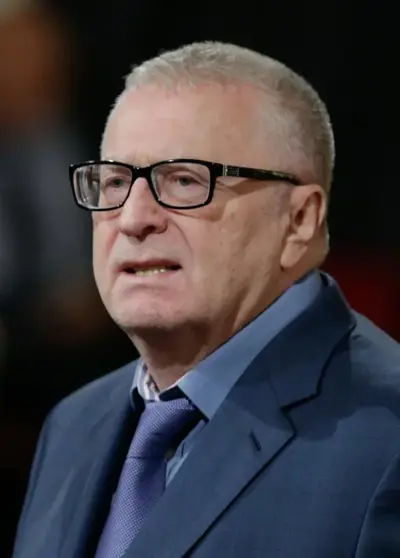
Vladimir Volfovich Zhirinovsky is a Russian politician and leader of the Liberal Democratic Party of Russia. He is fiercely nationalist and has been described as "a showman of Russian politics, blending populist and nationalist rhetoric, anti-Western invective and a brash, confrontational style". During the 1990s, his views were sometimes described in the West as fascist. He is considered by Russian scholars as a neo-Eurasianist.
