CONSTANTINE XI PALAIOLOGOS
(Constantine XI Dragases Palaiologos | Constantine XI)
The Ottoman Turks had already conquered the Eastern Roman empire outside of Byzantium. They had overwhelming superiority and it was just a matter of time when they would take the city. Surrender would have been the sensible course, but religious passion against surrendering the holy city capital of Christendom to the Muslims was dominant in the Emperor and some of the leadership. But the morale of most was very low—and for good reason. The Ottomans soon captured the city.
The city was besieged by the Ottoman Turks. The Emperor stayed and died in the siege. Ironically, if he had escaped earlier and allowed the city to surrender to the Sultan and his troops, very few of the city residents would have died, and the rapine and pillaging never would have occurred. The negative result is that the Muslims would have controlled what was regarded by many Christians as a holy Christian city. But that is exactly what occurred.
This is a good example of how religious zeal has sometimes caused rulers to really do stupid things. Rather than try and negotiate a deal with the Sultan and pay an annual tribute or other such diplomatic solution as was common at the time, he was convinced that God would make sure that the capital of the Eastern Roman Empire—a holy city would not fall to the infidel and allow all the holy relics to fall into the hands of the heathen. In reality he would not fight for the inhabitants; he would force the inhabitants to fight for him and his view of the will of God. The message was taken by the young Sultan to be a personal challenge to him and to his God. See {634805} for his response to Constantine.
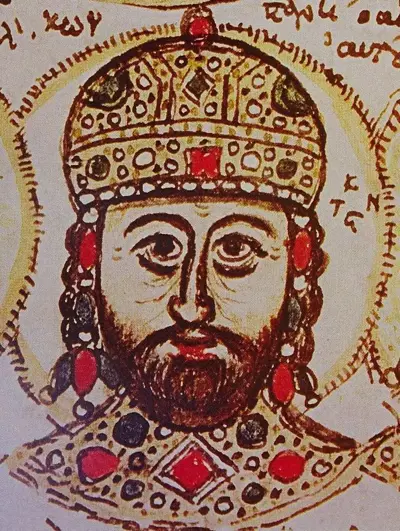
Constantine XI Dragases Palaiologos or Dragaš Palaeologus was the last Byzantine emperor, reigning from 1449 until his death in battle at the Fall of Constantinople in 1453. Constantine's death marked the end of the Byzantine Empire, which traced its origin to Constantine the Great's foundation of Constantinople as the Roman Empire's new capital in 330. Given that the Byzantine Empire was the Roman Empire's medieval continuation, with its citizens continually referring to themselves as Romans, Constantine XI's death and Constantinople's fall also marked the definitive end of the Roman Empire, founded by Augustus almost 1,500 years earlier.
