Constantine XI Palaiologos Quotes
How can I do this and leave the clergy, the churches of God, the empire, and all of the people? What will the world think of me? … No my lords, no! I will die here with you.
The city was besieged by the Ottoman Turks. The Emperor stayed and died in the siege. Ironically, if he had escaped earlier and allowed the city to surrender to the Sultan and his troops, very few of the city residents would have died, and the rapine and pillaging never would have occurred. The negative result is that the Muslims would have controlled what was regarded by many Christians as a holy Christian city. But that is exactly what occurred.
Constantine XI, Byzantine Emperor, Response to his advisors who had developed a plan for the Emperor to escape the surrounded and besieged city, escape to the Polloponese, regroup, and fight again, May ~3, 1453
Sourced by: Eigen's Political and Historical Quotations


Adams, after his presidency, served in the House of Representatives for many years. He collapsed at his desk in the House and died in the Speaker’s office.

After hearing that Speaker Thomas Reed's bid for the presidential nomination was thwarted by Mark Hanna in favor of William McKinley, Fessenden remarked to Joseph Homan Manley, chairman of the Republican National Committee:

At that point the Japanese were losing the war on every front. It is not clear whether Hirohito would actually have done such and not tried to escape in the end, however he certainly expected his subjects, military and civilian to do so. That expectation and the behavior of the Japanese troops fighting to the death on many islands was a powerful factor in leading Truman, Marshall and other key American leaders to use the Atomic Bomb. See Marshall: {641063}

Clark had Hancock and Adams for dinner. Paul Revere arrived to announce that “the British are coming.” The guests asked Reverend Clark if he thought that the people of Lexington would fight. They did, and some died.


Joseph Addison had earlier written of such a situation. Recent research has strongly suggested that Hale may never have said these words. The American patriots wanted to have heroes and may not have been too worried about the documentation and historical research. See {621112}


Ataturk had been a military hero, but was very much opposed to war and military adventurism not unlike the Dwight Eisenhower and Colin Powell type leaders. However, the one thing that he thought worth the sacrifice of his own and other Turkish lives was Turkish independence and sovereignty. Historically, the Ottoman Empire which Ataturk finally ended, had dominated half of Europe and all of the Mid East at the cost of sovereignty of other nations and Ataturk saw no more important virtue with dying for than national sovereignty. See {125322} and {584501}.


Compare Nathan Hale's last words.

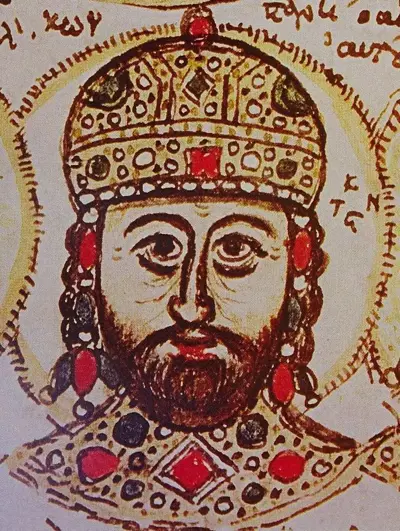
Constantine XI Dragases Palaiologos or Dragaš Palaeologus was the last Byzantine emperor, reigning from 1449 until his death in battle at the Fall of Constantinople in 1453. Constantine's death marked the end of the Byzantine Empire, which traced its origin to Constantine the Great's foundation of Constantinople as the Roman Empire's new capital in 330. Given that the Byzantine Empire was the Roman Empire's medieval continuation, with its citizens continually referring to themselves as Romans, Constantine XI's death and Constantinople's fall also marked the definitive end of the Roman Empire, founded by Augustus almost 1,500 years earlier.
