Constantine XI Palaiologos Quotes
God forbid that I should live as an Emperor without an Empire. As my city falls, I will fall with it. Whosoever wishes to escape, let him save himself if he can; as for me, I shall remain here.

Ataturk had been a military hero, but was very much opposed to war and military adventurism not unlike the Dwight Eisenhower and Colin Powell type leaders. However, the one thing that he thought worth the sacrifice of his own and other Turkish lives was Turkish independence and sovereignty. Historically, the Ottoman Empire which Ataturk finally ended, had dominated half of Europe and all of the Mid East at the cost of sovereignty of other nations and Ataturk saw no more important virtue with dying for than national sovereignty. See {125322} and {584501}.


Adams, after his presidency, served in the House of Representatives for many years. He collapsed at his desk in the House and died in the Speaker’s office.

In 1932 FDR was elected president by a desperate nation in the midst of the great depression. A month before the presidential inauguration an assassin attempted to murder the President-elect, but instead fatally shot the Mayor of Chicago who was talking with Roosevelt:

The Society of Cincinnati was formed just after the Revolutionary War by officers of the army, to perpetuate friendships, to aid each other and the widows and orphans of members, and to honor their French allies and comrades:

At that point the Japanese were losing the war on every front. It is not clear whether Hirohito would actually have done such and not tried to escape in the end, however he certainly expected his subjects, military and civilian to do so. That expectation and the behavior of the Japanese troops fighting to the death on many islands was a powerful factor in leading Truman, Marshall and other key American leaders to use the Atomic Bomb. See Marshall: {641063}

Bassi was one of the unique military chaplains in history. Instead of just ministering to the men spiritually, he marched at the head of the Italian revolutionary Army and was wounded in combat. Although he never carried arms, he was executed along with those who did.
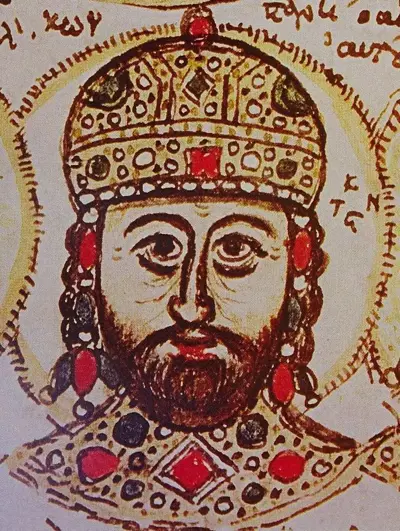
Constantine XI Dragases Palaiologos or Dragaš Palaeologus was the last Byzantine emperor, reigning from 1449 until his death in battle at the Fall of Constantinople in 1453. Constantine's death marked the end of the Byzantine Empire, which traced its origin to Constantine the Great's foundation of Constantinople as the Roman Empire's new capital in 330. Given that the Byzantine Empire was the Roman Empire's medieval continuation, with its citizens continually referring to themselves as Romans, Constantine XI's death and Constantinople's fall also marked the definitive end of the Roman Empire, founded by Augustus almost 1,500 years earlier.
