Winfield Scott Hancock Quotes
Colonel, I do not care to die, but I pray to God I may never leave this field.
Jordan, David M. Winfield Scott Hancock: A Soldier's Life. Indiana University Press, 1988, p. 98.


Ataturk was a young major at the time commanding troops of a weak and corrupt Ottoman regime. However a combined English and French (the strongest military powers in Europe) invasion of the Gallipoli Peninsula threatened to capture the Turkish capital, Constantinople. Ataturk alone rallied the Turkish defenders and fought the invaders to a standoff in long drawn out battle with huge casualties on both sides. Ataturk became a national hero. Although Ataturk thereafter was very reluctant to use military force or endanger troops, the thing he always thought worth the supreme sacrifice (including his own) was the independence and sovereignty of the nation. See {584502} for his continuing belief in this type of sacrifice.
Ataturk had been a military hero, but was very much opposed to war and military adventurism not unlike the Dwight Eisenhower and Colin Powell type leaders. However, the one thing that he thought worth the sacrifice of his own and other Turkish lives was Turkish independence and sovereignty. Historically, the Ottoman Empire which Ataturk finally ended, had dominated half of Europe and all of the Mid East at the cost of sovereignty of other nations and Ataturk saw no more important virtue with dying for than national sovereignty. See {125322} and {584501}.

Quintus Horatius Flaccus


Adams, after his presidency, served in the House of Representatives for many years. He collapsed at his desk in the House and died in the Speaker’s office.
Quintus Horatius Flaccus. This famous quotation has been echoed in virtually every language and every country of the world. However, see Ernest Hemingway for a counter view.


Joseph Addison had earlier written of such a situation. Recent research has strongly suggested that Hale may never have said these words. The American patriots wanted to have heroes and may not have been too worried about the documentation and historical research. See {621112}


The first two lines of the song became the slogan a few years later of veterans of the Normandy invasion of WWII.


Compare Nathan Hale's last words.

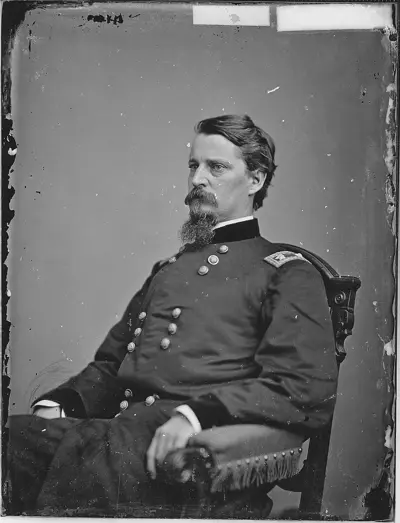
Winfield Scott Hancock was a United States Army officer and the Democratic nominee for President of the United States in 1880. He served with distinction in the Army for four decades, including service in the Mexican–American War and as a Union general in the American Civil War. Known to his Army colleagues as "Hancock the Superb", he was noted in particular for his personal leadership at the Battle of Gettysburg in 1863. His military service continued after the Civil War, as Hancock participated in the military Reconstruction of the South and the Army's presence at the Western frontier.
