Henry A. Kissinger Quotes
I have yet to meet a Russian who views the Ukraine as a separate state apart from Russia.
Historically Ukraine has been not only a part of Russia but a key part. The first Russian leader who unified the Russian nation and fought off the Mongols and Roman Catholic Western invaders came from the Ukraine. The origin of the Russian Orthodox Church was in the Ukraine. And the people of the Ukraine played a central and pivotal role in the Russian Revolution. And in World War II, despite a minoirty of Ukrainian nationalists who fought with the Nazis, the Ukraine bore much of the brunt of the German onslaught and the 22 million Russians who were killed, and yet fought so well that the Nazis were defeated. Many of the great Russian Heroes have been from the Ukraine. From the Russian point of view, Ukraine, was noi less a part of Russia than Florida, Iowa or Nebraska were to the United States.
Henry A. Kissinger, Quoted on CNN, Global Public Square, March 25, 2018
Sourced by: Eigen's Political and Historical Quotations


He had been the President of the Soviet Union which was all of a sudden 15 different nations. He resigned immediately.

This was his major justification for occupying and annexing the Crimea. He had a good historical point. The Crimea had been a part of Russia for centuries, and many Russians had died defending it over the years. At the high pont of the strength of the Soviet Union, the Soviet leadership reorganzied the "states" of the nation and placed the Crimea in the State of Ukraine -- which they also considered part of Russia and from where the great Russian hero, Alexander Nevsky came and unified Russia. When the Soviet Union broke up, Ukraine became an independent coutry and assumed Crimea belonged to it, based in the last administrative reorganization of the area before the break-up. However, most of the commerce in Crimea was with Russia proper and not Ukraine. And the Crimeans were mostly ethnic Russians or Taters--a minority who had no historical or cultural ties to Ukraine. Neither group spoke Ukrainian much. 90 percent of the Crimeans wanted to Remain with Russia and not be part of Ukraine. This was the main reason that the Russians were so easily able to send armed soldiers in civillian dress into Crimea to size the territory--the vast majority of the indigineous Crimean poluation wanted them there and strongly favored annexation claiming that they had the right as American President Woodrow Wilson put it to "self determination". Bit Ukraine would hot allow a formal plebicite. So Russia sized Crimea, had the plebicite, and based on the results and the desires of Putin and the Russian leadership, annexed Crimea.

This was an incredible prediction with no other world leader thinking it possible for decades until that is exactly what happened.


This quotation is very important in that this is the first record that Lincoln had any doubts that he might not be able to preserve the Union.


Even in modern times many politicians the world over agree with Davis’s point that for a government to function well, the nation must have a homogenous citizenship. This is especially true of dictatorships where control of a uniform culture and populous is easier than if it is diverse nation. In modern times, the three greatest economic and scientific powers, the United States, The Soviet Union, and China were and are multicultural societies with different ethnicities, races, religions, and cultures among their sitizenry.


He served as a liaison with the Russian military officers after WWII. As a result he developed friendships with some who told him much about Stalin and the Communist party of the Soviet Union.


Kiev is the largest city and capital of Ukraine.

During the 1920s there was a dispute between Romania and Russia regarding land area claimed by both. Few modern people know that Communist Russia, less than a decade after the Russian Revolution, had proposed the creation of a Jewish State. The State would be part of the Soviet Union and under Communist control. While there were some communist Russian Jews who were enthusiastic supporters of such a Jewish State, the Jews of the area were more concerned by the kind of autonomy the Jewish state would have. Western Jews were split. Most were Zionists and wanted an independent Jewish nation, not a Jewish subdivision of the Soviet Union. Pro Communist Jews tended to like the idea but many of them preferred a communist nation in Palestine. Anti-Communist Jews did not want Russia to dominate any more land and saw a Jewish state under communist domination as contrary to the highly traditional Jewish individualistic and independent culture. Soon Lord Balfour was to make his famous declaration about Palestine as a Jewish homeland, and most Jews and many others lost all interest in the earlier Russian idea.
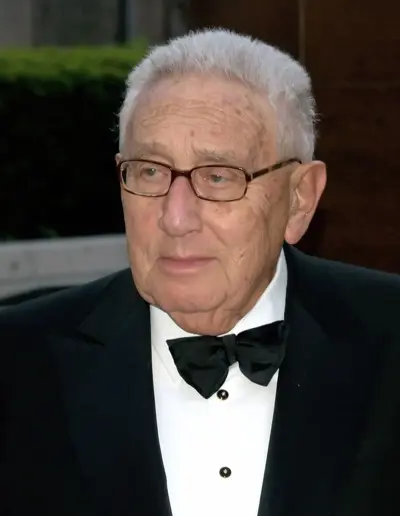
Henry Alfred Kissinger KCMG is an American politician, diplomat, and geopolitical consultant who served as United States Secretary of State and National Security Advisor under the presidential administrations of Richard Nixon and Gerald Ford. A Jewish refugee who fled Nazi Germany with his family in 1938, he became National Security Advisor in 1969 and U.S. Secretary of State in 1973. For his actions negotiating a ceasefire in Vietnam, Kissinger received the 1973 Nobel Peace Prize under controversial circumstances, with two members of the committee resigning in protest.
