Stephen Kotkin Quotes
Anti-Western resentment and Russian patriotism appear particularly pronounced in Putin’s personality and life experiences, but a different Russian government not run by former KGB types would still be confronted with the challenge of weakness vis-à-vis the West and the desire for a special role in the world. Russia’s foreign policy orientation, in other words, is as much a condition as a choice. But if Russian elites could somehow redefine their sense of exceptionalism and put aside their unwinnable competition with the West, they could set their country on a less costly, more promising course.

This was more than a decade after the fal of the Soviet Union.


At the end of WWII there was much tension between Russia and the Anglo-American alliance. This plan was developed but never implemented. See {613195} for Prime Minister Winston Churchill’s description of the invasion idea.

During the Cold War and afterwards many Americans attributed the problems we were having with the Soviet Union emenated from the fact that they were Communists, and our focus was anti-communism. Kennen, however argued that it was not Communism that was the cause of the Aggression of the Soviet Union. It was an extension of the Russian Culture. After the Soviet Union collapsed, and Communism was rejected by the Russians, we still had a great deal of Russian aggression and Foreign Policy problems with Russia. Kennan was right. It was the Russian culture, history, values and traditions that were the primary cause of most of the problems with Russia.


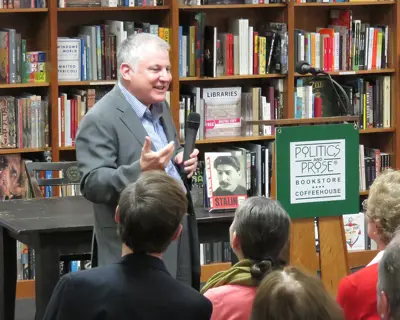
Stephen Mark Kotkin is an American historian, academic and author. He is currently the John P. Birkelund '52 Professor in History and International Affairs at Princeton University, where he is also co-director of the program in history and the practice of diplomacy and the director of the Princeton Institute for International and Regional Studies. He is also a senior fellow at the Hoover Institution at Stanford University. He has won a number of awards and fellowships, including the Guggenheim Fellowship, the American Council of Learned Societies and the National Endowment for the Humanities Fellowship.
