Andrei Kozyrev Quotes
In Russian foreign policy, nationalism -- patriotism -- is defined as opposition to the West.
Andrei Kozyrev, Russian Foreign Minister, Quoted in Susan B. Glasser, “Minister No”, Foreign Policy, May / June 2013
Sourced by: Eigen's Political and Historical Quotations


Russia, from the old Soviet Union days, had the only gas pipeline into Lithuania and took advantage of their monopoly by charging the Lithuanians 15 percent more than they charged other European nations where the Russians had some energy competition. The Lithuanians, decided to tie up a very large vessel at an island in their harbor to which Liquid Natural Gas (LGN) could be delivered by ship and converted to gaseous form and piped onto the mainland to provide competition for the Russians. However, the island was a bird sanctuary that was not supposed to be used for anything that might change the ecological balance of the island. This quotation shows that in some circumstances, environmentalists are willing to compromise to balance the benefits and costs.


This was more than a decade after the fal of the Soviet Union.


He served as a liaison with the Russian military officers after WWII. As a result he developed friendships with some who told him much about Stalin and the Communist party of the Soviet Union.


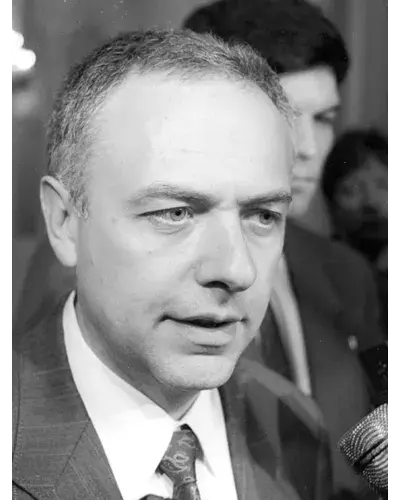
Andrey Vladimirovich Kozyrev is a Russian politician who served as the former and the first Minister of Foreign Affairs of the Russian Federation under President Boris Yeltsin, in office from October 1991 until January 1996. In his position he was credited with developing Russia's foreign policy immediately after the fall of the Soviet Union, although many in Russia have criticized him for being weak and not assertive enough in defending Russian interests in the face of the United States and NATO in places like Bosnia and Iraq. For this he took a lot of criticism from the nationalist politicians and parties. He also received positive reviews for his criticism of imperialism and improved relations with the West. Kozyrev had graduated from the Moscow State Institute of International Relations (MGIMO) with a Ph.D. in history before joining the Soviet Ministry of Foreign Affairs in 1974, holding various positions in it before being appointed foreign minister.
