Elie Wiesel Quotes
I don’t understand you. China is a large empire—the largest nation in the world—and Tibet is so small. Why should you care what is happening there? It’s irrational.
While the American Civil War was raging, Pinyin Hong Xiuquan started a quasi Christian religion (he claimed to be the brother of Jesus Christ) in China which initiated a war of extermination with the Manchus and other religions. More than 20 million Chinese were killed in a religious war that proportionately killed more Chinese than the Nazis killed in Europeans. Though hardly noticed in America and Europe, the religious war of extermination had been so traumatic that dissident religions are the most feared problem by Chinese modern leaders—more so than Capitalists, Taiwan or any of the modern ‘enemies’. It is the Falun Gong and the Tibetan Buddhists who the leadership fear might grow into another Yellow Turban movement—the worst Trauma of Chinese History—even worse than the Japanese WWII invasion. Hence the irrational view of the Chinese leadership towards religions they cannot control. See {612649} and {612649}. In Western terms as Wiesel put it, the Chinese leadership suppression of Tibet makes little or no sense, but current Chinese leadership is paranoid as a result of its history.
Elie Wiesel, Nobel Laureate in Literature, Statement to Chinese Diplomats Regarding their Suppression of Dissent in Tibet and their hostility to the Dali Lama, 2008, Quoted in Foreign Policy, July/August 2008
Sourced by: Eigen's Political and Historical Quotations

Earlier, treaties had been negotiated whereby whites purchased certain Indian lands. Tecumseh and others had objected not only to the concept of land sale, but to those who had sold the lands {612650}.

Sulu was an autonomous island province of the Philippines and at the time, the Philippines were governed by the United States.

The great challenge is trying to develop and modernize a culture that does not want to be modernized at the moment but still wants many of the benefits of modernization.


The Japanese have always been very race conscious seeing themselves as the racial pinnacle of Asian peoples and others as inferior. The peoples of Okinawa were not the racially pure Japanese and MacArthur turned out to be right that protection of Okinawan rights, prerogatives, and dignity was much less important than for ethnic Japanese. It would not be until the last decade of the 20th century that Japanese public opinion was seriously concerned about the Okinawans. Even then, Japan’s independence and dignity as a sovereign nation appeared more important than the rights and dignity of the native Okinawans.


Tibet and some other ethnic enclaves of China have been almost impervious to the general improvement in the standard of living that China accomplished at the end of the 20th century and beginning of the 21st. China is not the only nation to have this difficulty. Some would argue that America still has it with some of its Native American nations. The great challenge is trying to develop and modernize a culture that does not want to be modernized at the moment but still wants many of the benefits of modernization.


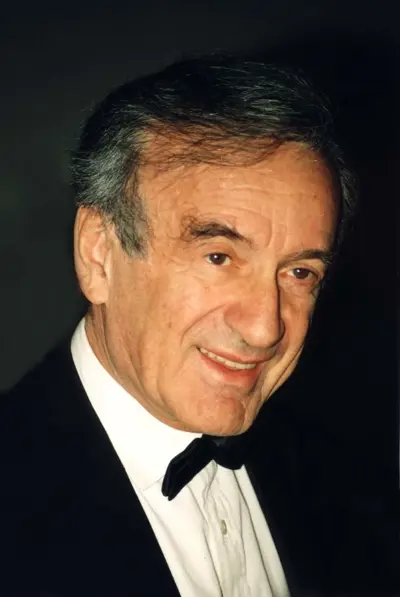
- Born: September 30, 1928
- Died: July 2, 2016
- Nationality: American
- Profession: Author, Professor, Activist
Elie Wiesel was a Romanian-born American writer, professor, political activist, Nobel laureate, and Holocaust survivor. He authored 57 books, written mostly in French and English, including Night, a work based on his experiences as a Jewish prisoner in the Auschwitz and Buchenwald concentration camps.
