Nicholas Kristof Quotes
There are other issues I have felt more emotionally connected to, like China, where I lived and worked for some time. I was living there when Tiananmen Square erupted.
Kristof, Nicholas. Interview by David Barsamian. The Progressive, Feb. 2006.

While the American Civil War was raging, Pinyin Hong Xiuquan started a quasi Christian religion (he claimed to be the brother of Jesus Christ) in China which initiated a war of extermination with the Manchus and other religions. More than 20 million Chinese were killed in a religious war that proportionately killed more Chinese than the Nazis killed in Europeans. Though hardly noticed in America and Europe, the religious war of extermination had been so traumatic that dissident religions are the most feared problem by Chinese modern leaders—more so than Capitalists, Taiwan or any of the modern ‘enemies’. It is the Falun Gong and the Tibetan Buddhists who the leadership fear might grow into another Yellow Turban movement—the worst Trauma of Chinese History—even worse than the Japanese WWII invasion. Hence the irrational view of the Chinese leadership towards religions they cannot control. See {612649} and {612649}. In Western terms as Wiesel put it, the Chinese leadership suppression of Tibet makes little or no sense, but current Chinese leadership is paranoid as a result of its history.


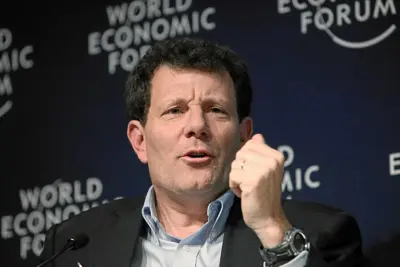
Nicholas Donabet Kristof is an American journalist and political commentator. A winner of two Pulitzer Prizes, he is a regular CNN contributor and has written an op-ed column for The New York Times since November 2001. Kristof is a self-described progressive. According to The Washington Post, Kristof "rewrote opinion journalism" with his emphasis on human rights abuses and social injustices, such as human trafficking and the Darfur conflict. Archbishop Desmond Tutu of South Africa has described Kristof as an "honorary African" for shining a spotlight on neglected conflicts.
