Hu Yaobang Quotes
We have worked nearly 30 years, but the lives of the Tibetans have not improved.
Tibet and some other ethnic enclaves of China have been almost impervious to the general improvement in the standard of living that China accomplished at the end of the 20th century and beginning of the 21st. China is not the only nation to have this difficulty. Some would argue that America still has it with some of its Native American nations. The great challenge is trying to develop and modernize a culture that does not want to be modernized at the moment but still wants many of the benefits of modernization.
Hu-Yaobang, 1915-1989, Chinese Communist Party Leader, General Secretary and Chairman of the Chinese Communist Party, Speech, Lhasa, Tibet, 1980
Sourced by: Eigen's Political and Historical Quotations

This has been a classic dilemma for all large multi ethnic states—trying to develop a sense of unity of citizenship in the face of populations who think of themselves foremost differently. Attempts like this of banning the names of the peoples from official use, banning languages, changing people’s names, requiring common dress and other such methods have failed in most cases (Ataturk’s Turkey being the notable exception). America, Great Britain and the Soviet Union showed the world that it was possible to have a strong sense of national unity and at the same time allow peoples, cultures, and ethnicities to maintain their own ethnic identities. However, many modern governments see their situation as so unique that ethnic repression of one kind or another is required. Modern China, in particular, while not as extreme as Sun Yat-Sen still makes it very difficult for certain cultures to thrive such as the Tibetans. Note that even in the United States we have many who argue that non English language usage should be discouraged and disapprove of the concept of hyphenated Americans. For example, see Theodore Roosevelt {631377}.

See {641733} for some background on the problem.


Some Tibetans believe that the Han Chinese will indeed develop the area, but will in the process change the nature of the area and its culture—that the Han culture will dominate just as initially minority cultures have dominated and transformed South Africa, India, Canada and even the United States. Of course, modernization per se changes a culture radically.


The great challenge is trying to develop and modernize a culture that does not want to be modernized at the moment but still wants many of the benefits of modernization.


The Israeli Arabs have a much higher standard of living than their coreligionists in the Arab controlled parts of Palestine and even Eqypt.See {588743} for more information that is related.

Although the Premier recognizes the importance of environmental protection it is difficult for China and other developing countries to make the necessary trade off’s at the expense of slower growth which means continued poverty. Even in the United States with all its affluence, slowing economic growth for environmental reasons is politically very difficult.


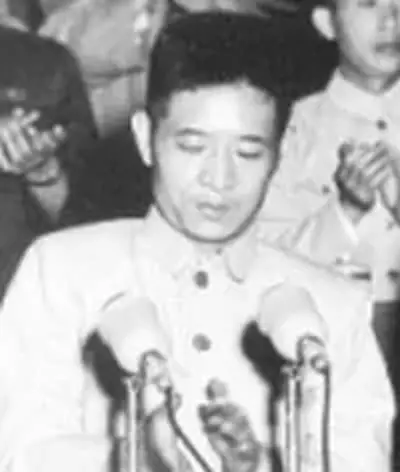
Hu Yaobang was a high-ranking official of the People's Republic of China. He held the top office of the Chinese Communist Party (CCP) from 1981 to 1987, first as Chairman from 1981 to 1982, then as General Secretary from 1982 to 1987. Hu joined the CCP in the 1930s, and rose to prominence as a comrade of Deng Xiaoping. During the Cultural Revolution (1966–1976), Hu was purged, recalled, and purged again by Mao Zedong.
