Milton Obote Quotes
The technical progress of the last half-century has transformed our country in countless ways. But, fortunately, we have continued to keep our own customs and culture. It is up to us now, more than ever, in shaping our new country, to achieve a consolidation, in which neither the rapid progress of recent years, nor the age-old customs of our forefathers, are lost or diminished, but rather fused into a new national characteristic in which the best is preserved, while the worst may be thrown away.
Milton Obote, 1925–2005, President & Prime Minister of Uganda (Socialist), Uganda Independence Speech, 1962
Sourced by: Eigen's Political and Historical Quotations


Tragically, the world paid a terrible price for the German upheaval before the better world finally emerged.


Very few countries make such overt recognition of the arts and their cultural heritage a part of their constitutions. Even nations which are fanatic about their cultures such as France do not have such overt constitutional provisions.

Note the belief that the author has the belief that over time homogeneity is important in a state, whereas the most successful modern states have been ones that are diverse—i.e. America, Britain, China, France. There have been some small successful states like Norway that are homogeneous, but large states need the heterogeneity.

Tibet and some other ethnic enclaves of China have been almost impervious to the general improvement in the standard of living that China accomplished at the end of the 20th century and beginning of the 21st. China is not the only nation to have this difficulty. Some would argue that America still has it with some of its Native American nations. The great challenge is trying to develop and modernize a culture that does not want to be modernized at the moment but still wants many of the benefits of modernization.


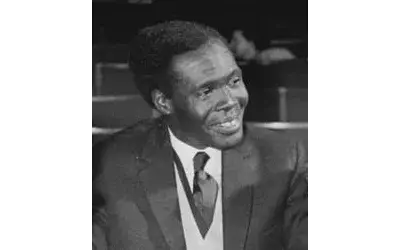
Apollo Milton Obote was a Ugandan political leader who led Uganda to independence in 1962 from British colonial administration. Following the nation's independence, he served as Prime Minister of Uganda from 1962 to 1966 and President of Uganda from 1966 to 1971, then again from 1980 to 1985. He was overthrown by Idi Amin in 1971, but was re-elected in 1980 a year after Amin's 1979 overthrow. His second period of rule ended after a long and bloody conflict known as the Ugandan Bush War.
