Shimon Peres Quotes
National cultures and heritages must compete for man's attention with the mind-absorbing advances of universal science.
Shimon Peres, Prime Minister, Israel (Labor), Nobel Peace Laureate, The Markkula Center for Applied Ethics, Reflections on Working Toward Peace
Sourced by: Eigen's Political and Historical Quotations


He was born in the Azerbaijan province of the Soviet Union and did most of his academic work in the United States. He is an example of a globalized scientist.


Very few countries make such overt recognition of the arts and their cultural heritage a part of their constitutions. Even nations which are fanatic about their cultures such as France do not have such overt constitutional provisions.

He was one of the first democratic politicians of Germany who argued for rapprochement between France and Germany and may have been the first to suggest a European Union. Most of the world was very distrustful of German nationalism, and Stresemann presented one of the positive aspects of it. He died of a stroke in 1929 and the political vacuum was eventually filled by Hitler and the Nazis as the Weimar Republic was short lived. As democratic as Stresemann was, he still was preoccupied with German territorial control. See {620664}.


This parochial and sectional point of view was held much more strongly by the South and to a great extent, still is. We are all conflicted by wanting and American culture (that can be adopted by the world in globalization) and also wanting local customs, cultures, norms, policies and thought patterns to exist. However, there is inevitable conflict between the two, so it is a constant American source of debate, ebb and flow.


His views are a mix of modernism and fundamentalism. He favors democracy and elections but also favored the Taliban destroying the great ancient Buddha statues when he was called an idol worshipper for urging the preservation of art.


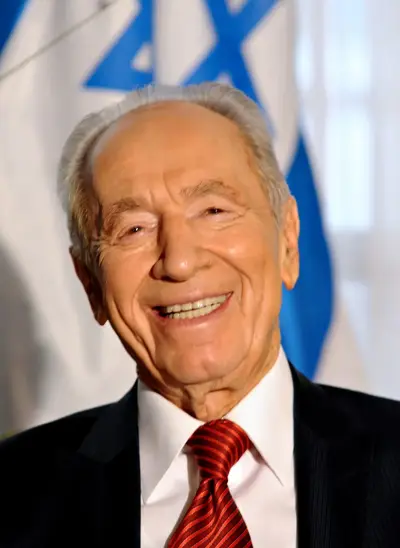
Shimon Peres was an Israeli politician who served both as ninth President of Israel, (2007–2014) and Prime Minister of Israel, as well as Interim Prime Minister. He was a member of twelve cabinets in a political career spanning nearly 70 years. Peres was elected to the Knesset in November 1959 and, except for a three-month-long hiatus in early 2006, was in office continuously until 2007, when he became President, being in that role for another seven years. At the time of his retirement in 2014, he was the world's oldest head of state. He was considered the last link to Israel's founding generation.
