Mohammed Arkoun Quotes
The politics of traditionalisation and the celebration of Islam as a component of national identities have thwarted the possibilities of modernizing tools of thought and institutions
Mohammed Arkoun, 1928–2010, Algerian / French Islamic Scholar & Reformer, “Present-Day Islam Between its Tradition and Globalisation”, Farhad Daftary (ed.)
Sourced by: Eigen's Political and Historical Quotations

Jinnah’s vision was for a modern educational system and curriculum throughout Pakistan. He would not have recognized the religious madrassas that taught only the Koran and Islamic subjects that became so prevalent in Pakistan by the 21st century.

At the time, Muslim clerics had a great deal of influence and in many cases legal control over all facets of Turkish society much as exists in other Islamic societies today. They even controlled what was taught in the schools. Remarkably, without bloodshed, Ataturk broke both the power and the influence of the clerics on all official and public activities. Many Turkish Muslims even developed a type of reformed Islam with the relationship between the individual and the clerics one of parity much like Protestant churches in the West. At the same time there was a more orthodox part of the population and while they sent their children to religious schools, they also attended public schools so even the orthodox Muslims in Turkey learned science and modern subjects which are still not taught in most Islamic schools and madrassas.

In the last centuries, Egypt has been intellectually more advanced than the other Arab countries. It has a significant number of modernists who oppose religious influences on Government. During the Arab Spring when the old regime was ousted, the modernists had hopes that a modern democracy would be formed that was not controlled of even significantly influences by religious leaders and where women would have equal rights. However, the first election the Muslim Brotherhood, a religious party won, and then tried to institute Islamic law—Sharia. A coup ousted the Muslim Brotherhood, and then many dreamed again of a modern, non-sexist, secular democracy. Professor Ajami tried to give them a more realistic view.
This was a radical speech for the time, suggesting reforms that had been unthinkable to most Turks. Although it is not prohibited by the Koran and early Islamic artists made some of the greatest paintings and depictions of people, fundamentalists gained control of Islam and interpreted any statue as an idol that could be worshipped and this generalized to Islamic art in general where people ceased to be depicted and even animal depictions were rare. Muslim art developed incredible geometric intricacy but tended not to depict anything that is real. This extended to photography and illustrations in books including textbooks. At the same time, not unlike some Christian and Jewish Fundamentalists, the Muslim fundamentalists opposed science and the teaching thereof on the grounds that all authentic knowledge was in the Koran and anything else was not only false but also heretical. So this speech was a type of “declaration of war” against the established religious order and culture.

10 centuries ago was a time when the Arabs were far more advanced and modern than other cultures including the Christian West that was in the Dark Ages. However, in the 12th century there was a “closing”—a narrowing of allowable Islamic thinking, and since then, Islamic people have had great difficulty with change or modernity. Not all Muslim nations are equally rigid but the Arabs are at the extreme among Islamic counties.


Stalin was then only 26 years old. This was more than a decade BEFORE the Russian Revolution and Stalin was a young left wing revolutionary planning how to bring about a revolution and how the society should operate thereafter. He was then much the youthful, intellectual, Georgian idealist.

This quotation demonstrates that even in the Iranian Islamic Fundamentalist Theocracy, not all the religious leaders are extremists and anti-human rights. However, Saanei is no longer in the top level of the Iranian government and more extreme fundamentalists have control of the government. But Iran is by no means monolithic.


Most Muslims in the world prefer a Western modern lifestyle to their traditional culture. The Islamic fundamentalist leaders however see evil and the dissolution of their traditions in this process of modernization and try and polarize their communities to intimidate the modernists. The same thing happened in Christianity over the last centuries and the modernists prevailed, but even in America there are still religious fundamentalists (Christians and Jews) who reject and oppose modernism. The difference is that in America, the anti-modernists are relatively few and not nationally influential on public officials while in many Islamic nations, they are numerous and very influential on public officials. The American religious fundamentalists have already lost in trying to stave off modernity; in many Islamic nations the contest is still in doubt.


Ataturk, trying to modernize Turkey was attempting it in a single generation and to a great extent succeeded.

This parochial and sectional point of view was held much more strongly by the South and to a great extent, still is. We are all conflicted by wanting and American culture (that can be adopted by the world in globalization) and also wanting local customs, cultures, norms, policies and thought patterns to exist. However, there is inevitable conflict between the two, so it is a constant American source of debate, ebb and flow.
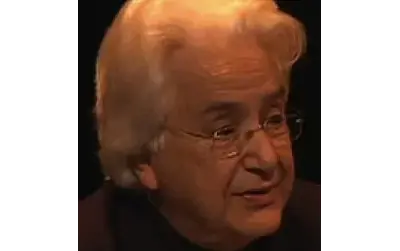
Mohammed Arkoun was an Algerian scholar and thinker. He was considered to have been one of the most influential secular scholars in Islamic studies contributing to contemporary intellectual Islamic reform. In a career of more than 30 years, he had been a critic of the tensions embedded in his field of study, advocating Islamic modernism, secularism, and humanism. During his academic career, he wrote his numerous books mostly in French, and occasionally in English and Arabic. He appeared on numerous occasions on French TV and magazines, on Berbère Télévision speaking in Kabyle, his mother tongue, and on Al Jazeera speaking in Arabic.
