Yousef Saanei Quotes
It is my interpretation from the Koran that all people have equal rights. That means men and women, Muslims and non-Muslims too, and in a society where all people have equal rights, that means all people should make decisions equally. ... This doesn't mean that we're changing God's law, It just means we're reinterpreting laws according to the development of science — and the realities of the times.
This quotation demonstrates that even in the Iranian Islamic Fundamentalist Theocracy, not all the religious leaders are extremists and anti-human rights. However, Saanei is no longer in the top level of the Iranian government and more extreme fundamentalists have control of the government. But Iran is by no means monolithic.
Yousef Saanei, Grand Ayatollah & First Head of the Guardian Council of Iran, Interview in Tehran, June 2000, Quoted in Robin Wright, Sacred Rage, 2001
Sourced by: Eigen's Political and Historical Quotations

This problem which was so well described over a century ago in Egypt, still vexes most of the Islamic world.
Husayn Ali Nuri. The equality of women which he proclaimed was another threat to Islam of which Bahai was a reform offshoot. Even in modern times in Iran, many Bahai are hunted down and executed.

This is a particularly interesting passage of the Koran. On the one hand it provides the religious justification for the sexist dominance of the male in a marriage. However, at the same time, it gave wives rights at a time when few cultures and religions did--such as the right to own and inherit property. Women in the Western world did not obtain some of these rights until the last hundred years. So historically, Islam was somewhat ahead of Christianity when Muhammed lived, but while most Western interpretations of gender role and rights have changed and advanced, a small minority of Islam has been reformist and modern so Islam has gone from a leader in modern gender relations to an obstacle to equality and fairness by not changing and reforming.

Jinnah was a modern Islamist who saw the role of females in a modern context. He, like the Indian Hindu leaders were in a sense products of the West and Western government and education. He would be very surprised that in his Pakistan men can murder their female relatives who they believe have dishonored the family, or that women would not be educated in the Madrassas, or that authorities could sentence a female relative of a man deemed guilty of seduction to be gang raped, but that is what happens in modern Pakistan. Jinnah and many of the early leaders believed that their new government could modernize Islam but the control and influence went the other way. Pakistan became a religiously dominated autocracy rather than the democracy that Jinnah foresaw.

This is one of the most positive statements about women and women’s rights to emanate from a leader of a Muslim Middle Eastern nation.


At the time, Muslim clerics had a great deal of influence and in many cases legal control over all facets of Turkish society much as exists in other Islamic societies today. They even controlled what was taught in the schools. Remarkably, without bloodshed, Ataturk broke both the power and the influence of the clerics on all official and public activities. Many Turkish Muslims even developed a type of reformed Islam with the relationship between the individual and the clerics one of parity much like Protestant churches in the West. At the same time there was a more orthodox part of the population and while they sent their children to religious schools, they also attended public schools so even the orthodox Muslims in Turkey learned science and modern subjects which are still not taught in most Islamic schools and madrassas.

Sharie is the Islamic code of law based on the Koran which is so brutal that they would stone a woman to death who had illicit sex or kill someone who wanted to change his religion.

She was born a Muslim herself and her life has been threatened by other, Muslims who are fundamentalists who are living proof or her point.


One of the interesting similarities between Islam and Judaism is that there is no intermediary between a person and God. There is no hierarchy of validity of interpretation other than what culturally people tend to want to respect clerics. Different cultural subgroups respect different clerical leaders and in many cases, no leaders at all. The latter is the majority in Judaism but still the minority among Muslims, The Baroness is one of the Islamic Reformers who gives little or no credence or respect to intermediaries especially males.

This quotation which appears absurd on the surface given Iran’s terrible record with religious minorities provides insight to Islamic orthodox thought. For the orthodox Muslim, Sharia—Koranic Law—is the basis of the society. God defines the rights of people and their obligations. Whatever rights are provided by Sharia, Khomeini and some others wished to provide them equally to religious minorities also. However, those rights do not include the right to criticize the Islamic law or the leaders who implement it. That would be heresy if done by a Muslim, a Christian, or a Jew. A Christian church may not erect a public cross or ring bells on Sunday. That is prohibited by the Koran and is imposed on all. Bahai religious adherents are tracked down in the Islamic Republic and are often executed. ‘What about their rights?’ they ask. The answer is that the Bahai were Muslims who have become “backsliders” and heretics, and under Sharia, they must be executed for heresy; they are deemed to be heretical Muslims and not members of a minority religion.

This remarkable statement was written in about 1840 and there was probably then few people of either gender who would think such a thing possible.
Jinnah was a modern Islamic reformer as this quotation demonstrates. Pakistan is not as backward as most of the Arab Islamic countries on the role of women. There are many Pakistani businesswomen and professionals. Pakistan has even had a female president. However, the fundamentalist Islamic forces that dominate the culture constantly preach and advocate the literal interpretation and following of Sharia which calls for a traditional, subservient traditional role for women; “honor killings” are common; “a rapist cannot be convicted on a female victims testimony; there are calls for the killing of adulteresses and other primitive throwbacks. Jinnah’s vision has not come to pass yet.


In Afghanistan and other Islamic nations where there is a fundamentalist view of women, many advocates of women’s rights have been assaulted and/or murdered. In some cases, on the grounds of blasphemy.

While this was a type of “Equal Rights Amendment”, It emphasized dignity rather than operations. For example, adultery was made a crime if committed by a woman (not for a man), And women could be dismissed from a job, simply because they were pregnant. And unusual aspect of this quotation is the fact that it applies to equality of dignity of Social status. In America we have this as an unwritten concept of fairness and egalitarianism, but it is not followed very much and certainly not guaranteed by our Constitution.


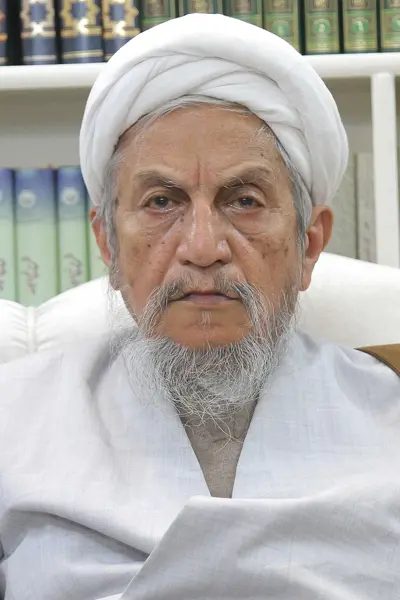
Grand Ayatollah Yousef Saanei was an Iranian Twelver Shi'a Marja' and politician, a member of the Islamic Republic of Iran's powerful Guardian Council from 1980 to 1983 and also Attorney-General of Iran from 1983 to 1985.
