Zainah Anwar Quotes
Modernity, democracy, and change have enabled more and more Muslim women activists, and Muslim democrats all over the world, to realize they can work within the Islamic framework to find liberation within Islam…. We feel strongly that we have a right to reclaim our religion, to redefine it, and to make sure Islam is codified and implemented in ways that take into consideration the realities of women’s lives today.
Zainah Anwar, Malayasian Feminist Scholar, Member, Sisters In Islam, “Perspectives from Malaysia,” Democratic Transitions and the Role of Islam in Asia, Asian Perspectives Seminar, October 18, 2000
Sourced by: Eigen's Political and Historical Quotations

One of the interesting similarities between Islam and Judaism is that there is no intermediary between a person and God. There is no hierarchy of validity of interpretation other than what culturally people tend to want to respect clerics. Different cultural subgroups respect different clerical leaders and in many cases, no leaders at all. The latter is the majority in Judaism but still the minority among Muslims, The Baroness is one of the Islamic Reformers who gives little or no credence or respect to intermediaries especially males.


Turkey, the only Islamic nation where women have equal rights, made huge developmental and reform strides immediately after Ataturk reformed Turkish society and gave women the vote, freed them from veils and chadors, educated them and gave them equal employment rights. Turkey moved from an impoverished 3rd world nation to a modern industrialized democracy.

This statement is referring to the custom of women covering their eyes whenever a man who they did not know passed them. Turks did not ever use Burkas the way some other Muslim countries do, but they wore headscarves and covered their eyes when a strange man appeared. This was a shocking statement in a sexist Islamic culture. Although the process of modernization and reform in Turkey was relatively bloodless, Ataturk was prepared to and did use force to defend it. This and many others made the role of women not only uniquely equal in the Islamic world, but women were suddenly elevated to the level of most Western nations and in voting rights were ahead of most. He used his own family to set an example. See {584503}.


Jinnah was a modern Islamist who saw the role of females in a modern context. He, like the Indian Hindu leaders were in a sense products of the West and Western government and education. He would be very surprised that in his Pakistan men can murder their female relatives who they believe have dishonored the family, or that women would not be educated in the Madrassas, or that authorities could sentence a female relative of a man deemed guilty of seduction to be gang raped, but that is what happens in modern Pakistan. Jinnah and many of the early leaders believed that their new government could modernize Islam but the control and influence went the other way. Pakistan became a religiously dominated autocracy rather than the democracy that Jinnah foresaw.
Husayn Ali Nuri. The equality of women which he proclaimed was another threat to Islam of which Bahai was a reform offshoot. Even in modern times in Iran, many Bahai are hunted down and executed.
10 centuries ago was a time when the Arabs were far more advanced and modern than other cultures including the Christian West that was in the Dark Ages. However, in the 12th century there was a “closing”—a narrowing of allowable Islamic thinking, and since then, Islamic people have had great difficulty with change or modernity. Not all Muslim nations are equally rigid but the Arabs are at the extreme among Islamic counties.


This quotation demonstrates that even in the Iranian Islamic Fundamentalist Theocracy, not all the religious leaders are extremists and anti-human rights. However, Saanei is no longer in the top level of the Iranian government and more extreme fundamentalists have control of the government. But Iran is by no means monolithic.
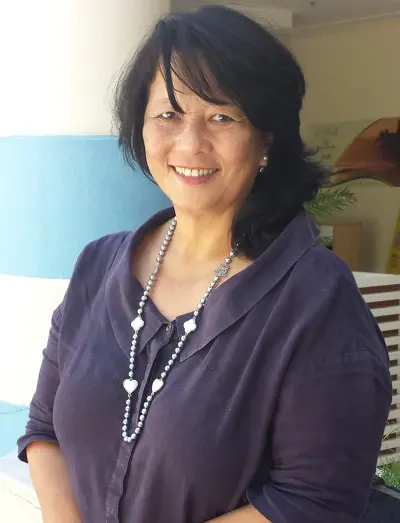
Zainah Anwar is a prominent Malaysian non-governmental organisation leader, activist and Muslim feminist. She was the head of the civil society organisation Sisters in Islam for more than two decades before stepping down. In 2013 she was named by the International Museum of Women as one of its 10 most influential Muslim women.
