Khalil Gibran Quotes
Yesterday we obeyed kings and bent our necks before emperors. But today we kneel only to truth, follow only beauty, and obey only love
Khalil Gibran, 1883-1931, Lebanese Poet & Mystic, The Vision - Reflections on the Way of the Soul
Sourced by: Eigen's Political and Historical Quotations


This is an amazing speech which illustrated the best of the development and growth of Islam. Note that: The ruler who has just been given ALL secular AND religious power admits candidly that he may not be the best qualified. This would not happen for over another 1000 years and even today is very rare in any society. In addition, he invites the citizens to correct him when he is wrong. Later, Calihs would, like the Christian kings and popes claim infallibiity and kill any who suggested otherwise. And daring to correct the ruler was capital offence for most of history and is even dangerous in some Muslim countries today. Last and perhaps most amazing, the new Caliph called for an affirmative leveling of the inequality of rights and power and announces it asa one of his major responsiblities. It is this kind of vision so unheard of at the time which shows us why so many flocked to Islam at the time. From a fairness, human rights, and accoutabiity of the ruler point of view Islam was the most modern of the religions then. Tragically, other forces shaped Islam for the next 1500 years and most Muslim countries become the least modern and its rulers are least accountable to the citizenry with none of the other rights and concept of fairness that Abu Bakr and other early Islamic leaders brought.


This newspaper was an English language organ published by General Allenby’s British and Allied forces in the Middle East. Prior to the war, the Middle East was all part of the Ottoman Empire. However, the Ottoman Turks sided with Germany in WWI and their Middle East dominions were targets for the allied military strategy.

Rebellion and revolution has always been unallowed in the Muslim religion.

Prevented by the Military from ever taking office. Despite complete military control of the media, she was ovefwhelming elected as President of the nation. However, the military resfused to allow her to fucntion in the office and kept her under house arrest for years.


This Proclamation was issued upon arrival of the British occupying imperial army in present day Iraq. The English policy makers like the Bush administration almost a century later were expecting a more welcoming reaction. See {585250}.


Those who have fought against dictatorial governments for their basic human rights, found after victory and the overthrow of the dictator, that there was another force fighting for control which would deny citizens human rights based on a theocracy. They wanted the end of the dictator so they could use their interpretation of a religion as the excuse to deny all citizens basic human rights.
This dictum is generally ignored by most fundamentalist Islamic clerics and politicians when it comes to describing the West in general, America in particular, Israel in the Middle East, lapsed Muslims, and other assorted heathens.


The Diggers were a religious-economic movement that even today would be considered very radical. They advocated the right of the poor to go onto public lands and farm them—thus the name “Diggers.” Beyond their opposition to the private ownership of land to the exclusion of the poor, Winstanley and the Diggers promulgated another very modern doctrine: That the poor should take the responsibility and have the right to determine how the society should provide for the poor. A version of this became one of the Mottos of the Poverty Program of 1964. See {616966}.


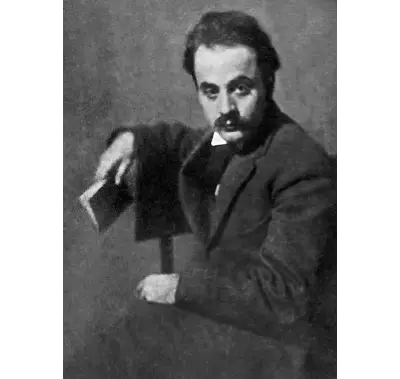
Gibran Khalil Gibran, usually referred to in English as Kahlil Gibran (pronounced /kɑːˈliːl dʒɪˈbrɑːn/ kah-LEEL ji-BRAHN), was a Lebanese-American writer, poet and visual artist, also considered a philosopher although he himself rejected the title. He is best known as the author of The Prophet, which was first published in the United States in 1923 and has since become one of the best-selling books of all time, having been translated into more than 100 languages.
