Haleh Afshar Quotes
Women who chose to fight for their rights in the context of Islam and its teaching are breaking new paths that had been barred to them for over a millennium. The process has been slow and hard and different in different countries. Throughout, the most effective strategy has been to insist that Islam does not recognize intermediaries between God and the believers, and each Muslim has the right to discover her/his faith and engage with it through the very words of God as recorded in the Koran.
One of the interesting similarities between Islam and Judaism is that there is no intermediary between a person and God. There is no hierarchy of validity of interpretation other than what culturally people tend to want to respect clerics. Different cultural subgroups respect different clerical leaders and in many cases, no leaders at all. The latter is the majority in Judaism but still the minority among Muslims, The Baroness is one of the Islamic Reformers who gives little or no credence or respect to intermediaries especially males.
Haleh Afshar, (Baroness Afshar), Member of the House of Lords (First Moslem Woman Lord, Iranian Born English Islamic Reformer, Political Scientist & Feminist, Speech, Islams & Feminisms, The Institute for Islamic Studies, November 2007
Sourced by: Eigen's Political and Historical Quotations


This statement is referring to the custom of women covering their eyes whenever a man who they did not know passed them. Turks did not ever use Burkas the way some other Muslim countries do, but they wore headscarves and covered their eyes when a strange man appeared. This was a shocking statement in a sexist Islamic culture. Although the process of modernization and reform in Turkey was relatively bloodless, Ataturk was prepared to and did use force to defend it. This and many others made the role of women not only uniquely equal in the Islamic world, but women were suddenly elevated to the level of most Western nations and in voting rights were ahead of most. He used his own family to set an example. See {584503}.

At the time most of the terrorists of the world were Muslim fundamentalists whose “values” they were supposedly fighting for included the suppression and repression of women.

Some Muslim women in Holland are virtual prisoners of their husbands and families. Many are beaten in conformity with a fundamentalist interpretation of the Koran. Some are even killed. Under previous concepts of Dutch tolerance and respect for pluralism the Muslims in Holland were not interfered with. However, due to her efforts, the rights of the women are now taking a higher priority and are not being subjugated to tolerance of Islam generally.


This was a very unusual statement for a major party, established, politician to make in a Muslim Arab nation where sexism is not only culturally entrenched, but strongly religiously enforced.]

This type of religious sexism is not unique to Islam. Fundamentalist Christians place women in a secondary role as do fundamentalist orthodox Jews although both allow a man to take only one wife. The Islamic scripture tells us that the Prophet allowed multiple wives only if the man had the resources to care for the wives and all the children. 4 is the maximum.


Sharie is the Islamic code of law based on the Koran which is so brutal that they would stone a woman to death who had illicit sex or kill someone who wanted to change his religion.
An immigrant Muslim woman herself, she was very familiar with the physical abuse of a woman in a Muslim household where she may not be the only wife and Islamic law and tradition makes her subservient to the man and allows her to be beaten by him.


This quotation demonstrates that even in the Iranian Islamic Fundamentalist Theocracy, not all the religious leaders are extremists and anti-human rights. However, Saanei is no longer in the top level of the Iranian government and more extreme fundamentalists have control of the government. But Iran is by no means monolithic.


Husayn Ali Nuri. The equality of women which he proclaimed was another threat to Islam of which Bahai was a reform offshoot. Even in modern times in Iran, many Bahai are hunted down and executed.

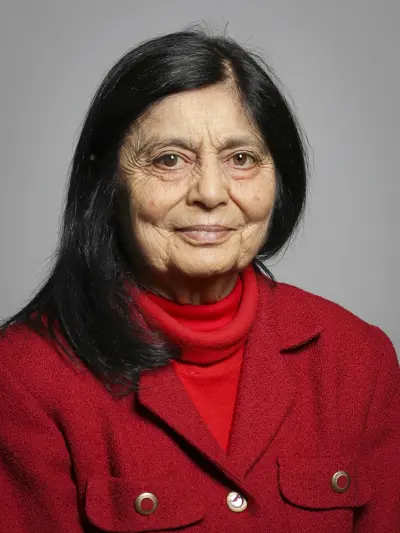
Haleh Afshar, Baroness Afshar, OBE FAcSS is a British life peer in the House of Lords.
