Mohammed Arkoun Quotes
Islam and its tradition have until now encountered modernity as a cultural aggression (al-ghazw al-fikri), not as a historical phenomenon.
Mohammed Arkoun, 1928–2010, Algerian / French Islamic Scholar & Reformer, “Present-Day Islam Between its Tradition and Globalisation”, Farhad Daftary (ed.) Intellectual Traditions in Islam, 2000
Sourced by: Eigen's Political and Historical Quotations

10 centuries ago was a time when the Arabs were far more advanced and modern than other cultures including the Christian West that was in the Dark Ages. However, in the 12th century there was a “closing”—a narrowing of allowable Islamic thinking, and since then, Islamic people have had great difficulty with change or modernity. Not all Muslim nations are equally rigid but the Arabs are at the extreme among Islamic counties.

Fiji is a nation which at the time was beset with ethnic strife and tension. In addition to the religious tension there were Indian immigrants who tended to be economically more successful than the indigenous Fijians. There was an English tradition from the days of being a British Colony and the traditional tribal leaders and chiefs were being disenfranchised by modern democratic structures. The military was not under the control of the civilian government and coups pitted some ethnic groups against others.

Some Muslims refer to Christians as polytheists because of the concept of the Trinity. To them this is worshipping more thn one God. The Roman Catholic practice of praying to the Virgin Mary is another exmple for them.

Ironically, while Radical Fundamentalist Muslims abroad claim that Western materialism and dem0cracy is not only anti-Islamic but a danger to Islam, in America there has been a growing and thriving Islamic community which has had far less difficulty reconciling their religion and American democracy and values than have other religions such as the Amish and orthodox Jews. This ease of the transition and Islamic compatibility with modern America is perhaps the central reason for the hatred of America. Aslan argues that the Muslim reformation is succeeding very smoothly in America and is the model for Muslims throughout the world.


Most Muslims in the world prefer a Western modern lifestyle to their traditional culture. The Islamic fundamentalist leaders however see evil and the dissolution of their traditions in this process of modernization and try and polarize their communities to intimidate the modernists. The same thing happened in Christianity over the last centuries and the modernists prevailed, but even in America there are still religious fundamentalists (Christians and Jews) who reject and oppose modernism. The difference is that in America, the anti-modernists are relatively few and not nationally influential on public officials while in many Islamic nations, they are numerous and very influential on public officials. The American religious fundamentalists have already lost in trying to stave off modernity; in many Islamic nations the contest is still in doubt.
This phrase and the theory behind it are often misattributed to Samuel P. Huntington who first used it as the title of a talk at the American Enterprise Institute in 1992 and the following year used if as the Title of a very important article in Foreign Affairs. Huntington was very familiar with Lewis’ works and doubtless used the Lewis phrase as it perfectly fit Huntington’s concept. See {604193}.

He is a Greek Orthodox Christian, and he correctly observes that the Islamic world was considerably more tolerant than the Christian until the 18th century when Islam had become less tolerant in the Middle East while the Christians were modernizing and going through a cultural and intellectual enlightenment and societal modernization while the Muslims, became less tolerant than they were in earlier years leading to the modern situation.

Essentially, he is advocating a reformation of the Islamic religion, much like that which has taken place in Christianity and Judaism. However, while most Muslims of the world are not extreme fundamentalists, most of the existing clerics (as did their Christian and Jewish counterparts years ago) turn any attempt at reform into blasphemy and sin. Throughout much of the Islamic world, Muslims who argue publicly for reform are at risk for their lives as the existing Muslim clerics generally encourage attacks on reforms or turn a blind eye to efforts to suppress reform.


This statement is referring to the custom of women covering their eyes whenever a man who they did not know passed them. Turks did not ever use Burkas the way some other Muslim countries do, but they wore headscarves and covered their eyes when a strange man appeared. This was a shocking statement in a sexist Islamic culture. Although the process of modernization and reform in Turkey was relatively bloodless, Ataturk was prepared to and did use force to defend it. This and many others made the role of women not only uniquely equal in the Islamic world, but women were suddenly elevated to the level of most Western nations and in voting rights were ahead of most. He used his own family to set an example. See {584503}.
At the time, Muslim clerics had a great deal of influence and in many cases legal control over all facets of Turkish society much as exists in other Islamic societies today. They even controlled what was taught in the schools. Remarkably, without bloodshed, Ataturk broke both the power and the influence of the clerics on all official and public activities. Many Turkish Muslims even developed a type of reformed Islam with the relationship between the individual and the clerics one of parity much like Protestant churches in the West. At the same time there was a more orthodox part of the population and while they sent their children to religious schools, they also attended public schools so even the orthodox Muslims in Turkey learned science and modern subjects which are still not taught in most Islamic schools and madrassas.
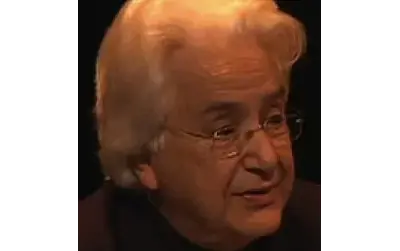
Mohammed Arkoun was an Algerian scholar and thinker. He was considered to have been one of the most influential secular scholars in Islamic studies contributing to contemporary intellectual Islamic reform. In a career of more than 30 years, he had been a critic of the tensions embedded in his field of study, advocating Islamic modernism, secularism, and humanism. During his academic career, he wrote his numerous books mostly in French, and occasionally in English and Arabic. He appeared on numerous occasions on French TV and magazines, on Berbère Télévision speaking in Kabyle, his mother tongue, and on Al Jazeera speaking in Arabic.
