Laisenia Qarase Quotes
I believe many of our country's differences stem from the lack of genuine appreciation of the cultures and religious traditions and beliefs of our various communities.
Fiji is a nation which at the time was beset with ethnic strife and tension. In addition to the religious tension there were Indian immigrants who tended to be economically more successful than the indigenous Fijians. There was an English tradition from the days of being a British Colony and the traditional tribal leaders and chiefs were being disenfranchised by modern democratic structures. The military was not under the control of the civilian government and coups pitted some ethnic groups against others.
Laisenia Qarase, Prime Minister of Fiji, Speech, Valelevu Grounds, May 22, 2005
Sourced by: Eigen's Political and Historical Quotations


Magh Bahul Ekadashi. To this day Golwalker is one of the most revered of the Hindu nationalists. This is the kind of intolerance that Indian Muslims faced amongst the most extreme Hindu’s. The possibility that this would become a reality was one of the great motivators for partition of India on the part of the Muslims. The irony is that the Muslim nation that was created—Pakistan—follows this doctrine exactly, only they substitute Islam for the Hindu culture. With the exception of a few Muslim nations, most of Islam follows the intolerance that the Hindu extremists would have followed. Ironically, “Hindu” India still has many millions of Muslims and they are given full citizenship and more democratic freedom and rights than Muslims have in almost all Islamic countries with the exception of Turkey.


Robertson does not mention the fact that Hindus are the majority of the world’s largest democracy—India. Freedom thrives there and political equality is extensive. However, economic equality is sadly lacking as in the Untied States. However, India is more unequal.

At the time Turkey was the only Muslim majority country where there was coexistence with secularism but with Christians and Jews as well. Ataturk, the great Turkish leader, turned Turkey around, modernized it, Westernized it, and made it a secular state with freedom of Religion, much like the United States. However, Erdogan’s party was constantly trying to make the state more Islamic as his electoral base were the poor, religious, Muslims.


Egypt is one of the very few Arab nations which advocated pluralism.

This phrase and the theory behind it are often misattributed to Samuel P. Huntington who first used it as the title of a talk at the American Enterprise Institute in 1992 and the following year used if as the Title of a very important article in Foreign Affairs. Huntington was very familiar with Lewis’ works and doubtless used the Lewis phrase as it perfectly fit Huntington’s concept. See {604193}.


This quotation illustrates that a narrow orthodox view of Islam is not the only one in Arab nations. Khaled is not an obscure cleric, but a popular television personality. While his views are considered heresy by many orthodox Muslims, the narrow view is by no means universal. Orthodox Islamists believe that God has commanded that all mankind be Muslims and the ones who are not are either ignorant so need to be “educated”, or evil and therefore should be killed. However, Muhammad ordained that an exception should be made for “Children of the Book”—Jews and Christians who revere the Old Testament. This was at a time when Christians would not allow any other form of worship but Christianity. Christianity, Judaism and most other religions have become tolerant of other religions and allow open alternative worship. Islam which early on led the way to tolerance, has in many countries gone back to the intolerance that existed amongst many Christians at the time of Muhammad.


For most Muslims, their religious identity supersedes their nationalistic identity. Sukarno’s quotation is famous because many ultraorthodox Muslims castigated him for putting nationalism before Islam. There is an orthodox Islamic concept of the Ulma—the community of all Muslims in the world, and this takes precedence over any nation or set of nations. In that sense, extreme Islamic fundamentalists have always opposed Sukarno claiming he was an enemy of Islam.

This quotation shows Washington's amazing tolerance for the times.

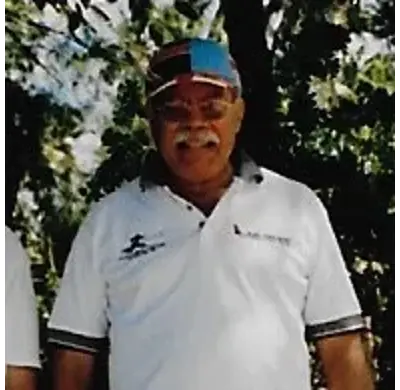
Laisenia Qarase was a Fijian politician. He served as the sixth Prime Minister of Fiji from 2000 to 2006. After the military quashed the coup that led to the removal of Mahendra Chaudhry, Qarase joined the Interim Military Government as a financial adviser on 9 June 2000, until his appointment as Prime Minister on 4 July. He won two parliamentary elections, but a military coup removed him from power on 5 December 2006. He was later imprisoned on corruption charges brought by the military-backed regime.
