Shashi Tharoor Quotes
The idea of India is not based on language, not on geography, not on ethnicity and not on religion. The idea of India is of one land embracing many. You can be many things and one thing: you can be a good Keralite, a good Muslim and a good Indian all at once.
Shashi Tharoor, Indian Politician, Journalist & Author, UN Under-Secretary General for Communications and Public Information, "A Culture Of Diversity”, Resurgence Magazine
Sourced by: Eigen's Political and Historical Quotations


For most Muslims, their religious identity supersedes their nationalistic identity. Sukarno’s quotation is famous because many ultraorthodox Muslims castigated him for putting nationalism before Islam. There is an orthodox Islamic concept of the Ulma—the community of all Muslims in the world, and this takes precedence over any nation or set of nations. In that sense, extreme Islamic fundamentalists have always opposed Sukarno claiming he was an enemy of Islam.


He was born in the Azerbaijan province of the Soviet Union and did most of his academic work in the United States. He is an example of a globalized scientist.


After Independence, the original credo of the Indonesian hero and leader was slowly ignored. The Muslim majority established Islam as the dominant religion and began to create laws that discriminated against Christians, Hindus, Buddhists, and Jews. The ethnic Chinese had been very successful in business and commerce and soon they were discriminated against and even physically attacked in Pogroms.

Fiji is a nation which at the time was beset with ethnic strife and tension. In addition to the religious tension there were Indian immigrants who tended to be economically more successful than the indigenous Fijians. There was an English tradition from the days of being a British Colony and the traditional tribal leaders and chiefs were being disenfranchised by modern democratic structures. The military was not under the control of the civilian government and coups pitted some ethnic groups against others.


See {640102} for his view of the relationship between territory and nationality and {640100} for his definition of a nation which is what most people use.

The Ottoman Empire was a word Superpower for over 1,000 years, longer than any other in history, One of its great strengths was its pluralism and ability to not only absorb and assimilate people from other nations, cultures and religions, but also to utilize those people in key positions and contributions to their society. Christians and Jews rose to the highest positions under the Sultans. They became Governor’s of Provinces, manages of departments and even Grand Vizier to the Sultan himself. Jewish and Christian physicians, attorneys, traders were all valued in the Empire even though the had a second class status relative to Muslims. The opportunity was always there to convert to Islam and many did, but many did not and thrived, The Ottomans saw Christian Europe, not only in continuous religious conflict, but individual nations were never able to use the talents of the religious minority, the way that the Ottomans did, and later the United States did. Not only did the Ottomans allow immigrants from all over the world to become part of the Empire Government or Economy, but they actually send agents throughout the empire to find the best and the brightest of young men—regardless of religion or nationality—and bring them to the Sultan’s court for education, training and service. IT should be noted however, that the motivation was in no way moral or a desire for fairness. It was totally pragmatic. Exceptional manpower was not to be wasted.


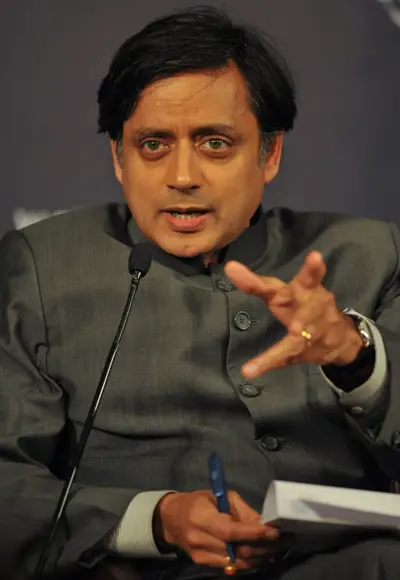
Shashi Tharoor is an Indian politician, writer and former international diplomat who has been serving as Member of Parliament, Lok Sabha from Thiruvananthapuram, Kerala, since 2009. He was formerly Under-Secretary General of the United Nations and contested for the post of Secretary-General in 2006.
