Charles Eliot Norton Quotes
We have really made an advance in civilization, that the principles on which our political and social order rest are in harmony with the laws of the universe, that we have set up an ideal which may never in genuine happiness certain...We are getting rid of old world things and becoming accustomed to the new. We are forming new creeds, new judgments, new manners; we are becoming a new race of men.
Charles Eliot Norton, 1827-1908, Reformer & Social Critic, 1865
Sourced by: Eigen's Political and Historical Quotations


10 centuries ago was a time when the Arabs were far more advanced and modern than other cultures including the Christian West that was in the Dark Ages. However, in the 12th century there was a “closing”—a narrowing of allowable Islamic thinking, and since then, Islamic people have had great difficulty with change or modernity. Not all Muslim nations are equally rigid but the Arabs are at the extreme among Islamic counties.


One of Ferguson’s theses is that historical change often happens very rapidly.


At the time, Muslim clerics had a great deal of influence and in many cases legal control over all facets of Turkish society much as exists in other Islamic societies today. They even controlled what was taught in the schools. Remarkably, without bloodshed, Ataturk broke both the power and the influence of the clerics on all official and public activities. Many Turkish Muslims even developed a type of reformed Islam with the relationship between the individual and the clerics one of parity much like Protestant churches in the West. At the same time there was a more orthodox part of the population and while they sent their children to religious schools, they also attended public schools so even the orthodox Muslims in Turkey learned science and modern subjects which are still not taught in most Islamic schools and madrassas.


1st Earl of Beaconsfield

Debs had unconstitutionally been arrested and jailed for opposing American entry into World War I. He was later pardoned by President Warren G. Harding.


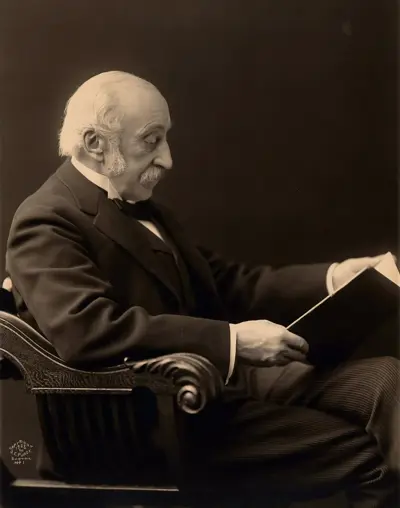
Charles Eliot Norton was an American author, social critic, and professor of art. He was a progressive social reformer and a liberal activist whom many of his contemporaries considered the most cultivated man in the United States. He was from the same notable Eliot family as poet T.S. Eliot.
