Thomas Carlyle Quotes
The three great elements of modern civilization, Gun powder, Printing, and the Protestant religion.
Thomas Carlyle, 1795-1881, Scottish essayist and historian, Member of Parliament, The State of German Literature
Sourced by: Eigen's Political and Historical Quotations


Martin Luther not only reformed Christianity but was a catalyst for many religious Christian alternatives thereby ending monolithic worldwide Christian religious doctrine and control. He argues that Islam must have a similar reform process.


It is an error to say that He was the last Pope to hold temporal power. 101 years later, the Vatican rejected this view and accepted Protestantism at Vatican II.

This is a very interesting quotation. It is an extreme left winger’s definition that is meant by her to show what is wrong with typical Western philosophy as opposed to that of other cultures. However, almost all “Westerners” would subscribe to her definition and not only be proud of it, but also explain the problem with much of the rest of the world as rejecting these characteristic philosophies.


The king was making his judgment that the English whites did not have the “gut” to kill the number of people and perpetuate the other cruelties to forcibly convert Black Africans to Christianity, and even if they did, it would be inconsistent with the moral tenets of the religion. He was not familiar with the Reformation persecutions of previous generations, nor did he anticipate the effect of colonialism by which large parts of Africa were culturally and religiously converted.

His answer was what Max Weber called “The Protestant Work Ethic.”


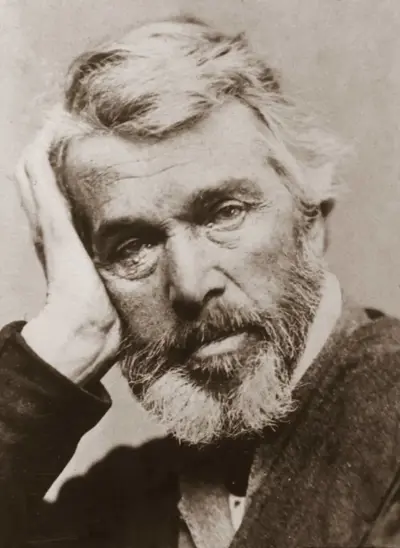
Thomas Carlyle was a Scottish historian, satirical writer, essayist, translator, philosopher, mathematician, and teacher. In his book On Heroes, Hero-Worship, and The Heroic in History (1841), he argued that the actions of the "Great Man" play a key role in history, claiming that "the history of the world is but the biography of great men". Other major works include The French Revolution: A History, 3 vols (1837) and The History of Friedrich II of Prussia, Called Frederick the Great, 6 vols (1858–65).
