Charles Kingsley Quotes
So give me the political economist, the sanitary reformer, the engineer; and take your saints and virgins, relics and miracles. The spinning-jenny and the railroad, Cunard's liners and the electric telegraph, are to me, if not to you, signs that we are, on some points at least, in harmony with the universe; that there is a mighty spirit working among us, who cannot be your anarchic and destroying Devil, and therefore may be the Ordering and Creating God.
Charles Kingsley, 1819-1875, English Anglican Clergyman & Author, Yeast: A Problem, 1848
Sourced by: Eigen's Political and Historical Quotations


Referring to the totally inadequate diplomatic communications in the political confusion and crises that led up to the First World War. None of the countries really wanted a large war, but the diplomatic communications were so bad that all operated on the assumption that the others were moving against them and they had to defend themselves or their treaty allies and there were very few opportunities to discern what other countries would do and all of Europe and much else of the world slipped out of control.


In China, the religious activities of the Missionaries never really lead to the many troubles between the missionaries and the Chinese. It was their activities in the non-religious arenas articulated here by Denby.


Boot argues that there are conditions which tend to foster technological development. Nations which are political unstable, or theocracies, rural, or suffering from food shortages have rarely developed much technology.

Chekov was distancing himself from the views of many of the Russian religious leaders and writers like Tolstoy who saw salvation and reform coming from religious virtue. Chekov was prescient enough to see the potential of technology in improving the human condition. Russia was then technologically backward and religion was one of the leading forces blocking technological development, education, and reform. This was one of the reasons that the Russian Revolutionaries were hostile to religion which had not only supported the Czar and the aristocracy but also kept modernism and technology out of Russian life. The situation was not unlike the role of Islamic leaders in Muslim countries one hundred years later.

This was a radical speech for the time, suggesting reforms that had been unthinkable to most Turks. Although it is not prohibited by the Koran and early Islamic artists made some of the greatest paintings and depictions of people, fundamentalists gained control of Islam and interpreted any statue as an idol that could be worshipped and this generalized to Islamic art in general where people ceased to be depicted and even animal depictions were rare. Muslim art developed incredible geometric intricacy but tended not to depict anything that is real. This extended to photography and illustrations in books including textbooks. At the same time, not unlike some Christian and Jewish Fundamentalists, the Muslim fundamentalists opposed science and the teaching thereof on the grounds that all authentic knowledge was in the Koran and anything else was not only false but also heretical. So this speech was a type of “declaration of war” against the established religious order and culture.


Citizen of U. S. & Israel


After Turkey’s defeat in WWI, some Turkish leaders like Riza Nur wanted Turkey to become a colony of America. This they believed would hasten Turkey’s development and modernization.

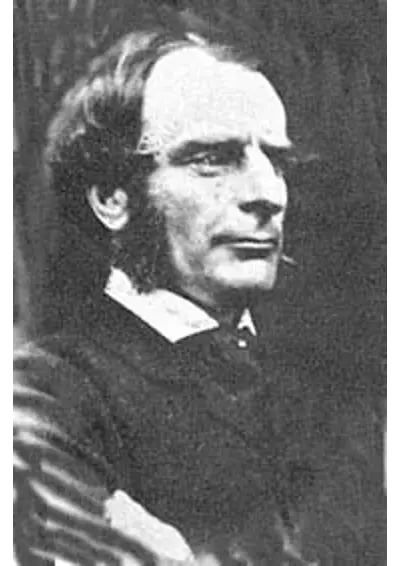
Charles Kingsley was a broad church priest of the Church of England, a university professor, social reformer, historian, novelist and poet. He is particularly associated with Christian socialism, the working men's college, and forming labour cooperatives, which failed, but encouraged later working reforms. He was a friend and correspondent of Charles Darwin.
