Francis Fukuyama Quotes
I've always had a Marxist understanding of history: democracy is a result of a broad modernization process that happens in every country. Neocons think the use of political power can force the pace of change, but ultimately it depends on societies doing it themselves.


He moved to the U. S. after these events.


And as the leader of the exploited, after his revolution he became a dictator himself, albeit a very popular one amongst most Cubans.

Despite the fact that many conservatives labeled him a Communist, he not only saw them as different but was very critical of the failure as he saw it of Russian Communism. See {626693} .

This is a very important historical, political quotation. The conservatives have since the Russian Revolution conflated socialism and communism. However, here in 1932 the leader of the American Socialist Party had already described the Communist Revolution in Russia as a failure of founding an acceptable modern state. Nonetheless, even into the 21st century many conservatives describe Thomas as a Communist. See {626692} for his distinction between Communism and Socialism. The difficulty of modern nation building was explained by Thomas and others but was really not accepted until the many attempts of the early 21st century, some supported by America like Iraq and Afghanistan and the Balkans and others like the “Arab Spring.” Then his early wisdom on this point became more appreciated.


In China, the religious activities of the Missionaries never really lead to the many troubles between the missionaries and the Chinese. It was their activities in the non-religious arenas articulated here by Denby.


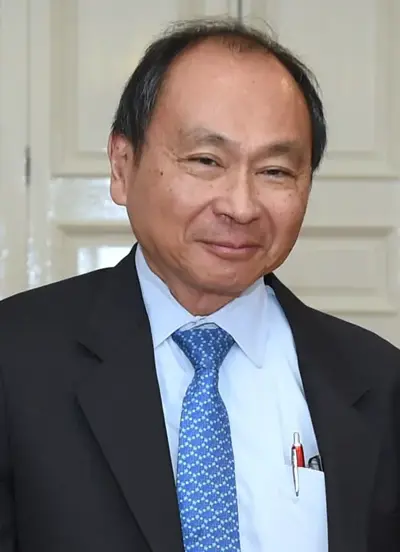
Yoshihiro Francis Fukuyama is an American political scientist, political economist, and writer. Fukuyama is known for his book The End of History and the Last Man (1992), which argues that the worldwide spread of liberal democracies and free-market capitalism of the West and its lifestyle may signal the end point of humanity's sociocultural evolution and become the final form of human government. However, his subsequent book Trust: Social Virtues and Creation of Prosperity (1995) modified his earlier position to acknowledge that culture cannot be cleanly separated from economics. Fukuyama is also associated with the rise of the neoconservative movement, from which he has since distanced himself.
