Rached Ghannouchi Quotes
Confronting violent extremism requires an understanding of the true teachings of Islam, which reject black-and-white views and allow for interpretations that accommodate the needs of modern life.
Essentially, he is advocating a reformation of the Islamic religion, much like that which has taken place in Christianity and Judaism. However, while most Muslims of the world are not extreme fundamentalists, most of the existing clerics (as did their Christian and Jewish counterparts years ago) turn any attempt at reform into blasphemy and sin. Throughout much of the Islamic world, Muslims who argue publicly for reform are at risk for their lives as the existing Muslim clerics generally encourage attacks on reforms or turn a blind eye to efforts to suppress reform.
"From Political Islam to Muslim Democracy", Foreign Affairs, September / October 2016
Sourced by: Eigen's Political and Historical Quotations


A Fatwa is an Islamic theological legal ruling. Islam has no hierarchy. So this Fatwa is not necessarily binding on any Muslims who do not wish to be bound by it. This is one of the relatively few Islamic theological organizations who have taken a public stand against terrorism.

He was out of office and speaking as an individual. The then President was spewing hate and barbaric fundamentalism which represented the views of the Mullahs who control Iran. (The President has very little power and he can be overridden by the religious authorities whenever those authorities feel that Islam is being compromised.
Muslim clerics throughout the world had been relatively mild in their criticism of Islamic Extremists and Terrorists. Delic was one of those who urged stronger moral statements. Many of the Muslim clerics in the world actually were themselves holders of Wahhabi and other extremist views. However, many also opposed terrorism and felt that there was nothing in Islam that could justify the indiscriminate killing. However, a number of these were intimidated lest an extremist Muslim cleric issue a Fatwa calling for his death for heresy. Most of us did not then, and even today, do no really understand the extent and frequency of these threats in the Muslim world (and even in the West) and the very frequent assassination or serious wounding of those Muslims who publicly criticize the extremist terrorists. Delic had much more courage than most.

Over a century ago, modern Islamists were critical of the Wahhabi sect for their extremism. Unfortunately, the Saudi Arabian royal family whose absolute control of the kingdom could be threatened by an extremist religious movement, cut a deal with the Wahhabi that not only gave them control over all religious and legal interpretations of Sharia in the kingdom, but also gave them large amounts of money with which the Wahhabi expanded and exported their extremist brand of Islam to many other counties—including the United States. A large part of the Islamic terrorism of the end of the 20th century into the 21st was caused by fanatics who had been exposed to Wahhabi schools (madrassas), mosques or materials which are virulently anti-Christian and ant-Semitic. Muslim intellectuals like Muhammad Abduh had warned about extremism in general and Wahhabi extremism in particular.

Islamic religious extremists do not allow freedom of religion, freedom of speech, freedom of the press, right to life, freedom from torture and mutilation, self-government, gender equality, protection of children or women from violence, sexual freedom, freedom of expression, reproductive rights for women, right work, which are just a few. The modern Islamic extremists allow about the same human rights as did the Christian Kings and the Church of 1000 years ago. Ironically, it is less respect for human rights that many of the great Islamic societies provided 1000 years ago.

Tragically, at the time, reasonable, moderate Muslims who did stand up at that time ran the personal risk of social, religious ostracism to physical attack and killing of them and their families.


Most Americans and Europeans and their governments feel that Muslim leaders and organizations have not done very much in terms of “drawing the line” and publicly condemning terrorism. However many of the critics did not understand the intimidation that exists in most Islamic communities where the fascist fundamentalists target any Muslim public critics as heretics and apostates themselves. Many have been killed or injured in assassination attempts.
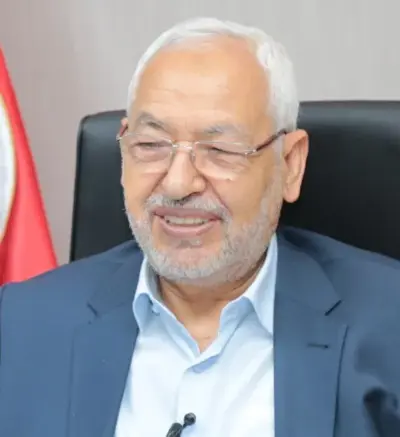
Rached Ghannouchi, also spelled Rachid al-Ghannouchi or Rached el-Ghannouchi, is a Tunisian politician and thinker, co-founder of the Ennahdha Party and serving as its "intellectual leader". He was born Rashad Khriji (راشد الخريجي).
