Muhammad Abduh Quotes
Most unfortunately, none among us arise as reformers save that they depart from moderation into extremism, and the call cannot succeed with extremism. The Wahhabis undertook reform, and their sect would be good were it not for their extremism and excess. What need is there for their call that the tomb of the Prophet be destroyed? Or their assertion that all other Muslims are infidels? Or that they must be extirpated?
Over a century ago, modern Islamists were critical of the Wahhabi sect for their extremism. Unfortunately, the Saudi Arabian royal family whose absolute control of the kingdom could be threatened by an extremist religious movement, cut a deal with the Wahhabi that not only gave them control over all religious and legal interpretations of Sharia in the kingdom, but also gave them large amounts of money with which the Wahhabi expanded and exported their extremist brand of Islam to many other counties—including the United States. A large part of the Islamic terrorism of the end of the 20th century into the 21st was caused by fanatics who had been exposed to Wahhabi schools (madrassas), mosques or materials which are virulently anti-Christian and ant-Semitic. Muslim intellectuals like Muhammad Abduh had warned about extremism in general and Wahhabi extremism in particular.
Muhammad Abduh, 1849-1905, Egyptian jurist, historian, political scientist, religious scholar and liberal reformer, Mufti of the Egyptian Realm, Editor and Chief of al-Waqāʾiʿ al-Miṣriyya (The Eyptian State Newspaper), Known as “The founder of Islamic Modernism”, Statement to Rashid Rida in their dialogue, World Order, Spring 1981
Sourced by: Eigen's Political and Historical Quotations


Few Islamic leaders have publicly made such unequivocal statements about the problem of extremism and fanaticism.

This statement of the Prophet is often quoted by Yusuf al-Qaradawi and other moderate, modernist Islamic clerics and leaders urging people to eschew terrorism and Muslim fundamentalist extremism.

He was one of the few Muslim political leaders who at that time called for reform of any aspect of Islam where reform and change are considered blasphemy and heresy by most Islamic theologians and clerics.

Essentially, he is advocating a reformation of the Islamic religion, much like that which has taken place in Christianity and Judaism. However, while most Muslims of the world are not extreme fundamentalists, most of the existing clerics (as did their Christian and Jewish counterparts years ago) turn any attempt at reform into blasphemy and sin. Throughout much of the Islamic world, Muslims who argue publicly for reform are at risk for their lives as the existing Muslim clerics generally encourage attacks on reforms or turn a blind eye to efforts to suppress reform.

This quotation is often given by those who believe that nothing has really changed regarding the Arabs and non-Islamic Westerners in the last century. While the support of dictators, Israel and support for that democracy, the artificial Western imposed borders, 9-11, or the Iraq war is often cited as the cause of Arab hostility and murderous aggression, as this quotation demonstrates, the problems and attitudes and behaviors existed long before any of these occurred. The borders were not set until after WWI and all the other causes occurred almost 50 years later, Yet there was still the propensity for fanaticism and violence. Sikes actually was one of those who was to determine the Arab borders, making one of the first “suggested” maps of the area for the English.


6th Baron Byron. This is one the earliest references to the ultra-fundamentalist Wahhabi Islamic sect which dominated Saudi Arabia Islam in the late 20th and early 21st century and which inspired terrorism against the West and Israel. When Byron wrote this canto the sect was just a decade old and had already taken over Mecca by violence. Byron was prophetic.


The images of the hostages in the Russian School:
The reason he claimed that Governor Taseer was a blasphemer was that the governor opposed death penalty for saying or writing anything that was heresy or blasphemy as interpreted be fundamentalist Muslims. The Governor knew he was taking a risk. See {620970} .


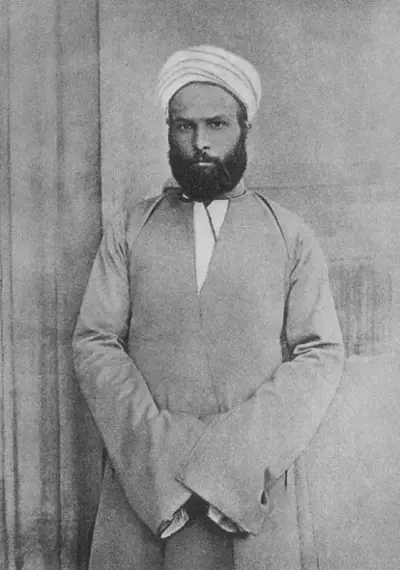
Muḥammad 'Abduh (also spelled Mohammed Abduh, Arabic: محمد عبده) was an Egyptian Islamic scholar, jurist, theologian, mujaddid, Freemason, and writer. He also wrote, among other things, "Treatise on the Oneness of God", and a commentary on the Quran. He briefly published, alongside Jamāl al-Dīn al-Afghānī, the Pan-Islamist anti-colonial journal Al-Urwah al-Wuthqa.
