Mohamed ElBaradei Quotes
Modernity and moderation is what we need in Egypt.
Mohamed El Baradei, Vice President of Egypt, Egyptian Diplomat & Nobel Peace Prize Winner, Director General of the International Atomic Energy Agency, Interview, CNN The Public Square, December 6, 2009
Sourced by: Eigen's Political and Historical Quotations

Over a century ago, modern Islamists were critical of the Wahhabi sect for their extremism. Unfortunately, the Saudi Arabian royal family whose absolute control of the kingdom could be threatened by an extremist religious movement, cut a deal with the Wahhabi that not only gave them control over all religious and legal interpretations of Sharia in the kingdom, but also gave them large amounts of money with which the Wahhabi expanded and exported their extremist brand of Islam to many other counties—including the United States. A large part of the Islamic terrorism of the end of the 20th century into the 21st was caused by fanatics who had been exposed to Wahhabi schools (madrassas), mosques or materials which are virulently anti-Christian and ant-Semitic. Muslim intellectuals like Muhammad Abduh had warned about extremism in general and Wahhabi extremism in particular.


10 centuries ago was a time when the Arabs were far more advanced and modern than other cultures including the Christian West that was in the Dark Ages. However, in the 12th century there was a “closing”—a narrowing of allowable Islamic thinking, and since then, Islamic people have had great difficulty with change or modernity. Not all Muslim nations are equally rigid but the Arabs are at the extreme among Islamic counties.
This statement was made 20 years before the Arab Spring of 2011.


Most Muslims in the world prefer a Western modern lifestyle to their traditional culture. The Islamic fundamentalist leaders however see evil and the dissolution of their traditions in this process of modernization and try and polarize their communities to intimidate the modernists. The same thing happened in Christianity over the last centuries and the modernists prevailed, but even in America there are still religious fundamentalists (Christians and Jews) who reject and oppose modernism. The difference is that in America, the anti-modernists are relatively few and not nationally influential on public officials while in many Islamic nations, they are numerous and very influential on public officials. The American religious fundamentalists have already lost in trying to stave off modernity; in many Islamic nations the contest is still in doubt.


From the latter part of the 20th century onward, religious nationalism was no longer a force for most religions and nations except Muslim countries. It was the only religion left where a large proportion of the adherents saw no distinction between the religion and the government. Nations that had separation of church and state were not conducive to the extreme fundamentalist form of Islam where the Secular Leader and the Religious leader was to be embodied as a single person. As a result Islamic religious nationalists argued for a Theocracy and at times fought for it with violent means. The secular government typically, to curtail the violence and prevent a religious takeover, often outlawed the extreme religious Islamic parties. While Aslan cites the Muslim Brotherhood failure in Egypt as a desirable outcome, the only way the other forces of Egyptian society could prevent the Islamists from taking over turning the country into a theocracy was to forcefully repress the extremists. The Turkish outcome was much better, but there was the threat of repression of the Justice and Development Party when it won a majority control of the government. There were explicit threats that if it tried to weaken the secular nature of the government as Ataturk had formulated it, the military would come “out of the barracks” and oust the government as they had done before. There were nations like China which persecuted religions such as certain forms of Christianity, but those religions were not fighting for religious nationalism. They only wished the freedom to practice their religion and had no program or theology that argued for Christianizing the government. The Tamil Hindus of Sri Lanka did not want a Hindu government and were perfectly free to practice their religion. The problem was that they felt that there was systemic social and economic discrimination against the Tamils and they fought for independence—not of a Hindu state, but of a secular, nondiscriminatory state of equal opportunity.


This is a very Jeffersonian type statement.

The Israeli Arabs have a much higher standard of living than their coreligionists in the Arab controlled parts of Palestine and even Eqypt.See {588743} for more information that is related.


She is a leading American Arab who is a Syrian expatriate.


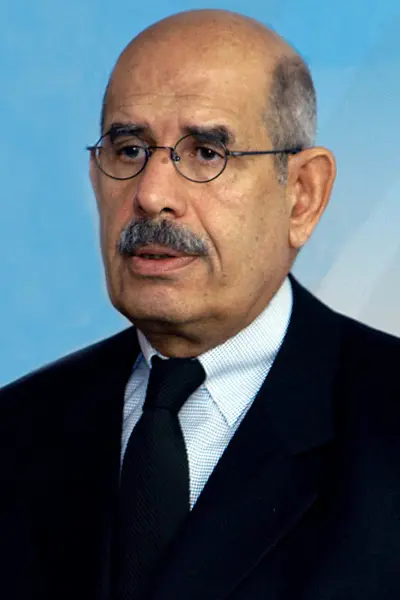
Mohamed Mustafa ElBaradei is an Egyptian law scholar and diplomat who served as Vice President of Egypt on an interim basis from 14 July 2013 until his resignation on 14 August 2013.
