Muhammad Quotes
… in accordance with justice, the rights of the wives are equal to the husband’s rights with regard to them, although men have precedence over them
This is a particularly interesting passage of the Koran. On the one hand it provides the religious justification for the sexist dominance of the male in a marriage. However, at the same time, it gave wives rights at a time when few cultures and religions did--such as the right to own and inherit property. Women in the Western world did not obtain some of these rights until the last hundred years. So historically, Islam was somewhat ahead of Christianity when Muhammed lived, but while most Western interpretations of gender role and rights have changed and advanced, a small minority of Islam has been reformist and modern so Islam has gone from a leader in modern gender relations to an obstacle to equality and fairness by not changing and reforming.
Muhammad, 571-632, Prophet and Founder of Islam, Koran 2:228
Sourced by: Eigen's Political and Historical Quotations

This type of religious sexism is not unique to Islam. Fundamentalist Christians place women in a secondary role as do fundamentalist orthodox Jews although both allow a man to take only one wife. The Islamic scripture tells us that the Prophet allowed multiple wives only if the man had the resources to care for the wives and all the children. 4 is the maximum.
This technique she describes is consistent with Sharia—Islamic Law. It however is used by very few women who are sophisticated and courageous enough to do so.

This relatively radical viewpoint regarding equal rights for women was expressed by Roosevelt as his Senior thesis at Harvard in 1880. In those days, the kind of scrutiny of everything a candidate ever wrote or said that is characteristic of modern politics, did not exist. It is very doubtful that if the Republican Party officials had ever known that he had espoused these views—even as a young student, that he ever would have risen so high in the party, much less get nominated at the Vice Presidential candidate which was his entree to the Presidency. When in office however, there is no record of him reviving his youthful proposal that women who marry retain their maiden names.
Within Christianity there has been a continual debate regarding a woman’s proper role in society in general and in church affairs in particular. This quotation is often used to justify a husband’s dominant role over the wife. Also it supports those who object to women in the ministry or the priesthood. See {587062}. It is useful to note that much of Islam which preaches a similar view of females, probably learned it from Christianity which preceded Islam by almost 600 years.

Some modern Islamic scholars have attempted to make this Sura more acceptable by arguing that the size of the stick with which the man may beat the “disobedient” wife should be limited. The contemporary argument concentrates on the size of the stick. There are also a few fundamentalist Christians who advocate the right of a husband to beat his wife on the grounds that this was accepted in Biblical times.

This quotation demonstrates that even in the Iranian Islamic Fundamentalist Theocracy, not all the religious leaders are extremists and anti-human rights. However, Saanei is no longer in the top level of the Iranian government and more extreme fundamentalists have control of the government. But Iran is by no means monolithic.
This 12th century observation which appears so obvious has been ignored by the vast majority of Islamic scholars and writers subsequent until modern times, and even then they represent the small reform minority of Islamic thinking.

Jinnah was a modern Islamic reformer as this quotation demonstrates. Pakistan is not as backward as most of the Arab Islamic countries on the role of women. There are many Pakistani businesswomen and professionals. Pakistan has even had a female president. However, the fundamentalist Islamic forces that dominate the culture constantly preach and advocate the literal interpretation and following of Sharia which calls for a traditional, subservient traditional role for women; “honor killings” are common; “a rapist cannot be convicted on a female victims testimony; there are calls for the killing of adulteresses and other primitive throwbacks. Jinnah’s vision has not come to pass yet.

She was born a Muslim herself and her life has been threatened by other, Muslims who are fundamentalists who are living proof or her point.

He is often referred to as The Reformer as he was a modernist. In particular, the told his people that there was no religious obligation is Islam for wearing a veil or a burka. These are just customs. Yet most Muslims still believe that veils and burkas were required by God. The only Koranic statement on the subject simply says that women should dress modestly. Despite his efforts, veils and burkas are still required by most Afghani families and most people think the requirement is religious.


At the time, in many states married women could not control their own inheritance, could not sign a contract, owned no part of a family business that a women might have founded and worked in her entire life, could not be an executor of a will—even if it were her husband’s.
The deed was made out in the name of her husband followed by the phrase “et ux”. That is a legal abbreviation for “et uxor” which literally means “and wife”. It was in use in English and American law from the time that married women had no right to property and the wife was a mere appendage to the husband. It is still recognized as a proper form by the law of many states.
The “People of the Book” were the Jews and Christians who received special status in Muslim lands and societies. Despite the enmity and Muslim fundamentalist terrorism of modern times, Jews have historically lived in relative harmony in Islamic lands, and with the exception of the Christians in the Crusades, Christians were also given a place in Muslim societies. The “Book” refers to the Bible.

This is one of the biblical passages which cause some Christian Fundamentalists to prescribe a secondary and subjugated role for women. Also the view that women, like children, should be seen and not heard. Also it supports those who object to women in the ministry or the priesthood or in senior teaching positions. See {587063}. It is useful to note that much of Islam which preaches a similar view of females, probably learned it from Christianity which preceded Islam by almost 600 years.
Husayn Ali Nuri. The equality of women which he proclaimed was another threat to Islam of which Bahai was a reform offshoot. Even in modern times in Iran, many Bahai are hunted down and executed.


Sharie is the Islamic code of law based on the Koran which is so brutal that they would stone a woman to death who had illicit sex or kill someone who wanted to change his religion.

In a country like Saudi Arabia, such a statement would be very radical. However, before the Arab Spring in Tunisia, that country was much more modern than most Arab nations and headscarfs were not required nor was there much social pressure for them except in the rural areas. So this was a status quo statement opposing the Islamic Parties which advocated mandatory traditional dress for women.

This was formalized in 1972 and was the law of the land. “Sack” is a difficult translation. The Albanian concept is that she is an object with no feelings or thinking ability. Women were forbidden from obtaining a divorce, and the wife's parents were obliged to return a runaway daughter to the husband or else suffer shame which could even result in a generations-long blood feud. In the 1960s Enver Hoxha led the Communist Government in a major reform movement on the rights of women. See {639128}.

Almost all religions placed women in an inferior status in society with little of the freedom or power—civil or religious—for men that the religion urged.
At the time the law in the United States gave a husband control of all property of the wife including any money she might earn. In this sense the English Christian legal tradition was far less fair and modern than even Islam which guaranteed some property and inheritance rights to women.
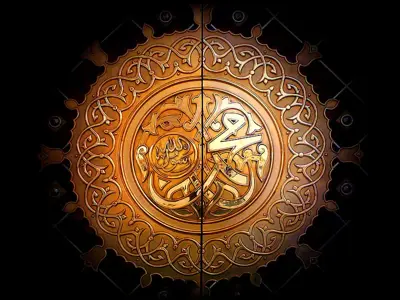
Muhammad was an Arab religious, social, and political leader and the founder of Islam. According to Islamic doctrine, he was a prophet, sent to preach and confirm the monotheistic teachings of Adam, Abraham, Moses, Jesus, and other prophets. He is believed to be the final prophet of God in all the main branches of Islam, though some modern denominations diverge from this belief. Muhammad united Arabia into a single Muslim polity, with the Quran as well as his teachings and practices forming the basis of Islamic religious belief.
