Farzaneh Milani Quotes
In the early days of Islam, women were much more socially and politically active than they are today.
Farzaneh Milani, Iranian Born Historian & Islamic Literature Scholar, Interview, C-SPAN, Book TV, March 22, 2012
Sourced by: Eigen's Political and Historical Quotations

Many politicians in that day would campaign from large carts drawn by oxen – a predecessor to the bandwagon of sorts. She was 1 of the 4 women who entered Oberlin College in 1837 thus becoming the first co-educational institution of higher education in the United States.

Marcus Porcius Cato. This quotation has had two different interpretations over time. One was that women if they received equality of treatment and voting would have an advantage for they also had their traditional “feminine wiles” and their sexuality, hence would dominate men. The second was a also a warning but based on the fact that women were superior in many ways, and given an equal chance, would excel men. The later interpretation is argued by some who point to the 2011 American data that shows more females than males graduating from high school and college, and females outnumber males in medical, law and several other professional schools. With the exception of a few Roman men, most heeded Cato’s warning and never took a chance on female equality.
The Hijra was the spread of Islam after The Prophet organized the first Muslims. Islamic reformers have been trying to improve the legal and cultural position of women in Islamic Societies ever since with little success, even in modern times. The notable exception was the Turkish Revolution led by Ataturk. He was familiar with Aga Kahn arguments for reform and put the force of law behind them. See {444998}.


The Bible and the Church have been the greatest stumbling blocks in the way of women’s emancipation.
The most important documents and doctrine of most churches were created by men who also established the framework of the religion. The result has in almost all cases been a sexist structure with women having not only little power not typically females are banned from all church governance. See {640303} for her quote on religion in general vis a vis women.


This 12th century observation which appears so obvious has been ignored by the vast majority of Islamic scholars and writers subsequent until modern times, and even then they represent the small reform minority of Islamic thinking.


First female presidential candidate & first divorcee to run for that office


Mrs. Roosevelt thought that with the rate of improvement in society’s perception and treatment of women was improving so steadily that women in America were not far from equality. Because of the shortage of men on the home front in WWII women had performed well in virtually all occupations including welding, heavy construction and management and it was just a matter of time to reach equality of pay and parity. However, she and most feminists did not take into account the 2 million men returning from military service who wanted their jobs back. Sexists, who had been suppressed during the war when they objected to women in non traditional occupations, were no longer silenced by national necessity. An occupational backlash developed. Then a sexual one regarding contraception and family planning, (Condoms for example were illegal up to 1963 as birth control device). Each major step forward was accompanied by its own backlash and even in the Presidential Campaign of 2012 contained debate on women’s control over their own bodies relative to abortion and contraception.

Jinnah was a modern Islamic reformer as this quotation demonstrates. Pakistan is not as backward as most of the Arab Islamic countries on the role of women. There are many Pakistani businesswomen and professionals. Pakistan has even had a female president. However, the fundamentalist Islamic forces that dominate the culture constantly preach and advocate the literal interpretation and following of Sharia which calls for a traditional, subservient traditional role for women; “honor killings” are common; “a rapist cannot be convicted on a female victims testimony; there are calls for the killing of adulteresses and other primitive throwbacks. Jinnah’s vision has not come to pass yet.
It would take almost a thousand years for the relationship between women’s role in society, standard of living, poverty and development would be recognized by all but the most fundamentalist religious orders. Yet, at the flowering of Islamic intellectualism, the idea was discussed.


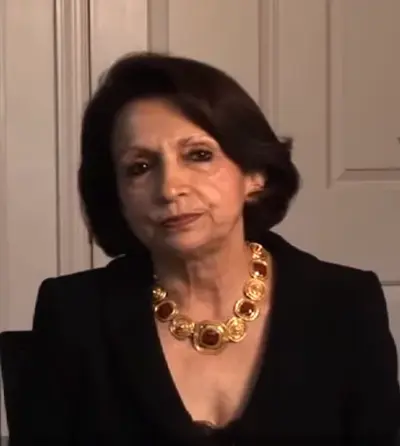
Farzaneh Milani (Persian: فرزانه میلانی born c. 1947) is an Iranian-American scholar and author. Milani teaches Persian literature and Women’s Studies at the University of Virginia. Milani is Chair of the Department of Middle Eastern and South Asian Languages and Cultures. She is also a poet, award-winning translator, and a recipient of the Carnegie Fellowship and the National Endowment for the Humanities. Milani’s 1992 book Veils and Words: the Emerging Voices of Iranian Women Writers (Syracuse, 1992), has seen its sixteenth printing.
