Amanullah Khan Quotes
Religion does not require women to veil their hands, feet and faces or enjoin any special type of veil. Tribal custom must not impose itself on the free will of the individual
He is often referred to as The Reformer as he was a modernist. In particular, the told his people that there was no religious obligation is Islam for wearing a veil or a burka. These are just customs. Yet most Muslims still believe that veils and burkas were required by God. The only Koranic statement on the subject simply says that women should dress modestly. Despite his efforts, veils and burkas are still required by most Afghani families and most people think the requirement is religious.
Amanullah Khan, 1919-1929, King of Afghanistan, Quoted in Afghanistan On-Line, http://www.afghan-web.com/history/quotes.html
Sourced by: Eigen's Political and Historical Quotations

This was another historical reality that shocked traditionalists. There was nothing in the Koran or Islamic scripture requiring women to wear veils and burkas. Many Muslims and non-Muslims, to this day, do not realize that.


This is the famous sura that has been interpreted to require women to be covered, wear the chador or burka completely covering them or just a headscarf as other Muslims interpret it. Note that a literal reading does not require complete covering. Fundamentalists in Islam do not only rely on the precise literal statement through they would never dispute it. But many would believe that it is metaphorical for not revealing anything that might be stimulating to men. The sura goes on to list those male relatives who are exempted. These are the same as those where marriage is forbidden.
This type of religious sexism is not unique to Islam. Fundamentalist Christians place women in a secondary role as do fundamentalist orthodox Jews although both allow a man to take only one wife. The Islamic scripture tells us that the Prophet allowed multiple wives only if the man had the resources to care for the wives and all the children. 4 is the maximum.


This statement is referring to the custom of women covering their eyes whenever a man who they did not know passed them. Turks did not ever use Burkas the way some other Muslim countries do, but they wore headscarves and covered their eyes when a strange man appeared. This was a shocking statement in a sexist Islamic culture. Although the process of modernization and reform in Turkey was relatively bloodless, Ataturk was prepared to and did use force to defend it. This and many others made the role of women not only uniquely equal in the Islamic world, but women were suddenly elevated to the level of most Western nations and in voting rights were ahead of most. He used his own family to set an example. See {584503}.


This is one of the biblical passages which cause some Christian Fundamentalists to prescribe a secondary and subjugated role for women. Also the view that women, like children, should be seen and not heard. Also it supports those who object to women in the ministry or the priesthood or in senior teaching positions. See {587063}. It is useful to note that much of Islam which preaches a similar view of females, probably learned it from Christianity which preceded Islam by almost 600 years.
This is a particularly interesting passage of the Koran. On the one hand it provides the religious justification for the sexist dominance of the male in a marriage. However, at the same time, it gave wives rights at a time when few cultures and religions did--such as the right to own and inherit property. Women in the Western world did not obtain some of these rights until the last hundred years. So historically, Islam was somewhat ahead of Christianity when Muhammed lived, but while most Western interpretations of gender role and rights have changed and advanced, a small minority of Islam has been reformist and modern so Islam has gone from a leader in modern gender relations to an obstacle to equality and fairness by not changing and reforming.
Islam is no more monolithic than any of the other major religions. This view is not held by most Muslim Coutnries or Islamic leaders throughout the world. It is held by a significant minority however.


The large communal worship of Muslim men is dramatic throughout the Islamic world for the non-participation of women. However, as this quotation demonstrates, it was not always thus. There is precedent for large communal Islamic worship of women.
The burqa wearing practice was outlawed by French Law.

This quotation is important because it emphasizes an aspect of freedom of religion that is not usually discussed—the freedom to LEAVE a religion. As an Islamic reformer born in Iran, this notion is extremely important. Under Sharia—Islamic Law—capital punishment is required for anyone who converts from Islam to any other religion. This has been made a part of the civil law of many Islamic nations from Afghanistan to Saudi Arabia as well as Iran where Sharia IS the civil law. There is no other religion in the world which makes conversion away from the religion a capital crime requiring execution. Executing people who leave a religion is a major violation of the Universal Declaration of Human Rights.


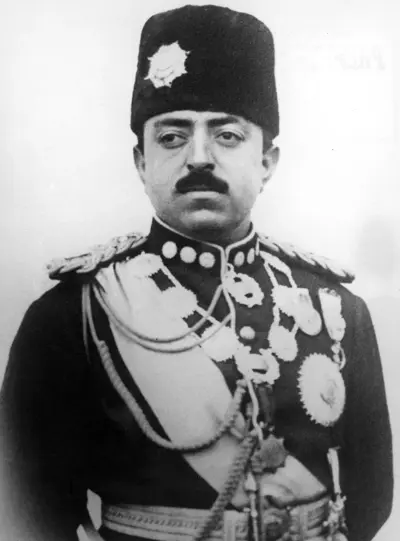
Ghāzī Amānullāh Khān (Dari: غازی امان الله خان, Pashto: غازي امان الله خان) was the sovereign of the Kingdom of Afghanistan from 1919 to 1929, first as Emir and after 1926 as King. After the August 1919 end of the Third Anglo-Afghan War, Afghanistan was able to relinquish its protected state status to proclaim independence and pursue an independent foreign policy free from the influence of the United Kingdom.
