Elizabeth Cady Stanton Quotes
Women's degradation is in man's idea of his sexual rights. Our religion, laws, customs, are all founded on the belief that woman was made for man.
Elizabeth Cady Stanton, 1815-1902, First President, National Woman Suffrage Association, Letter to Susan B. Anthony, June 14, 1860
Sourced by: Eigen's Political and Historical Quotations


Mill was one of the early thinkers to realize that gender discrimination was not only unfair to women, but was a barrier to progress for the whole society including the men.


Ferrer was the last public figure to be executed in Europe for heresies like this.


The Bible and the Church have been the greatest stumbling blocks in the way of women’s emancipation.
The most important documents and doctrine of most churches were created by men who also established the framework of the religion. The result has in almost all cases been a sexist structure with women having not only little power not typically females are banned from all church governance. See {640303} for her quote on religion in general vis a vis women.


He served a jail sentence in Britain for inciting race hatred.


Schafly is an inveterate anti-feminist who has made statements like these on the quotation throughout her career. There are no feminists who agree that their objectives include what Shafly claims they are. And feminists do not urge sexual promiscuity. They do urge that women have the same right to sexual promiscuity as men. In some cultures women’s adultery can be grounds for divorcing her and her losing her rights to her children, and in Muslim cultures death by stoning is the consequence. However, adultery on the part of the male has few if any legal consequences. When feminists object to that patent differentiation, they do NOT advocate that women commit adultery, but that the law treat men and women equally and fairly.


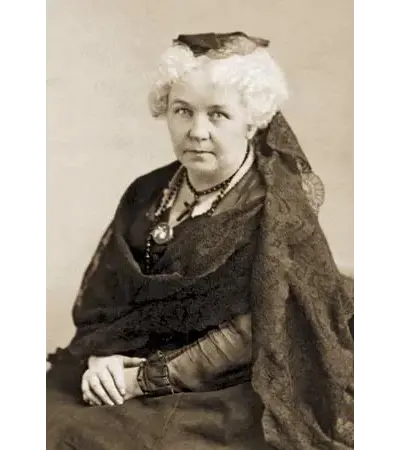
Elizabeth Cady Stanton was a leader of the women's rights movement in the U.S. during the mid- to late-1800s. She was the main force behind the 1848 Seneca Falls Convention, the first convention to be called for the sole purpose of discussing women's rights, and was the primary author of its Declaration of Sentiments. Her demand for women's right to vote generated a controversy at the convention but quickly became a central tenet of the women's movement. She was also active in other social reform activities, especially abolitionism.
